Showing posts with label holocaust. Show all posts

Jan 11, 2012

Book Review: "Heir to the Glimmering World"

If you've never read something by Cynthia Ozick, then you're seriously missing out. My first encounter with Ozick was in the last class of my last year of my undergraduate career -- American-Jewish Fiction with one of my favorite professors who I wrote about recently because he passed away. In that class, we read Ozick's The Shawl, which offered a portrait of the survivor's mentality and subsequent destruction therein. It is an incredibly short read, but an incredibly powerful read that will have you in tears.

When I was back in Nebraska last month, I picked up a ton of delicious used books at A Novel Idea, and one of them happened to be a Cynthia Ozick book I was neither familiar with nor had read -- Heir to the Glimmering World. I'm happy to say that this is one of those books that's incredibly hard to put down, and since it was my bedside table, pre-bed book, it made it hard to get through.

The narrative features Rosie, an 18-year-old whose father's curious past leaves her in an interesting place when he passes. She ends up living with her "cousin" Bertram, but when he takes up with a radical named Ninel (Lenin backwards!), Rosie is off to new frontiers, which leads her to the home of a family of refugees. The bulk of the book takes place in the 1930s when Rosie is in the home of the Mitwissers in The Bronx, where she is something of an assistant to the elder Mitwisser, a once-prized professor in the old country. The family has been affected in strange ways by the changes in Germany in the 1930s, and each of the family members handles things differently. Having been of the German elite, the family now relies on their benefactor, James A'Bair, who has his own strange, obscure background that left him "in the money." Rosie plays a greater role in the family than she can ever imagine, and Heir to the Glimmering World, and the book is unexpected in where it begins and where it ends.

I was incredibly pleased with this book, and it definitely had Ozick's balance of light and darkness in storytelling. The glimpses of hope and despair are so perfectly balanced, and unlike so many stories of refugees from the 1930s and 1940s from Europe, this story doesn't follow the typical trend. Judaism doesn't play a major role in the book, despite the elder Mitwisser being an aficionado on the Karaites.

Ultimately, this is a book about crushed dreams, new realities, a loss of security, and moving on with life when you lose everything and have to start fresh. It was a truly powerful read, and I highly recommend it!

Apr 10, 2011

A Jewish Funeral Experience

It's been around 13 years since I attended a funeral. At least, that's the last one I remember. It was my Uncle David, who wasn't really my Uncle David. I wrote a poem about it in college, recollecting the man who was more of a grandfather figure to me than anything else. Uncle David was my father's step-mother's family, distant, but oh-so-close to my father and to us kids. From the poem, "Uncle David Stole My Nose" ...
When I think about the funeral,
I remember looking into the casket
and seeing Uncle David’s face.
I remember, at that awkward age between
childhood and becoming a young woman,
wondering why he wasn’t smiling.
I remember telling my father, as we
left the burial site after crying and hugging
and holding relatives close, that Uncle
David’s lips should have been curved up.
Smiling as he always was.
Because that’s how everyone knew him,
that’s how I knew him,
when he was alive. ... 
I’ve try to forget the funeral and the burial,
while trying to keep Uncle David as
he was the last time I saw him before
he looked so sad in that big black box.
But I continue to recall driving past the Big Boy
where we’d eat with Uncle David every
now and then when we visited.
I remember crying and thinking about how
empty my dad was, because he’d
lost a father figure. But I know I cried
mostly because I’d lost a
Grandfather, and my nose would stay put
and I realized I was no longer
a child.
That funeral took place during a bizarre weekend where there was a wedding and a funeral. Emotional ups and downs were extreme. But this is my memory of funerals -- Christian funerals. 

Until this past week, I had not been to a Jewish funeral. I've written about paying shiva calls and the difficulty of really coming to terms with that tradition, but nothing could have prepared me for this week. I was, in plain words, an emotional wreck graveside. 

At my Uncle's funeral, it began with service at the funeral chapel, there were Bible verses read, the mood was depressing and morose, and seeing my dead uncle in the box put a forever-image in my head. We all took off to the graveside service afterward, where, everyone, dressed in black, huddled around the plot that had been carved out. The beautiful casket was held on props while words were said, words from the Bible were read, and then we departed. Only after that was the casket lowered -- we didn't watch the casket go down. We left knowing that he was still floating somewhere above the service. 

At Roszi's funeral (I blogged about her passing here) -- as I assume is true at all Jewish funerals -- the casket was lowered simply in its wooden-box form into the space in the ground. A rabbi related Roszi's life to those of us huddled under umbrellas in the cold rain, and then, then the men took a shovel and heaved dirt onto the wooden casket. 

Thump. Thump. Thump. 

And I lost it. I don't know why, but my tears just streamed -- and as I write this, my eyes are welling ... and I just don't know why. The sound of dirt -- dirt to dirt -- hitting a simple wooden casket was something I hadn't expected. Something that, to be honest, would never have happened at a funeral back home, back in my old life. The sounds ruptured something deep within me, emotions for a woman who I had barely known and who had not known me at all. 

"How many times did you even meet Roszi?" my husband asked after the funeral. 

I suppose that this is the purpose of such a visceral display of Jewish burial. It is participatory, permanent, and real. In a way, I suppose it seals the truth and the reality of what has happened. As people started to walk away, people were chattering and smiling and everyone except for the immediate family and I seemed to be unshaken by the events. 

I started to wonder: Have I become a softy? Overemotional? Or was it simply my neshama crying out for the loss of a soul so tortured for absolutely no reason.

Apr 4, 2011

Baruch Dayan ha'Emet.

That's Roszi, on the left. Probably taken in the early or mid-1930s.
I've known for some time that the generation of Holocaust survivors has been disappearing. Old souls are finding their way to shamayim, and in some way, are finding their way to peace after facing some incredible horrors. But -- as someone who in the past struggled to tie herself into the memory of the Shoah -- the reality of the passing of a generation never truly hit home.

Until now.

I've been meaning to write for such a long time about my husband's family and all of the amazing things we've found out about those who perished in the Holocaust. Tuvia's been cleaning out the home of one of his great-aunts and his great-uncle, and he's found some amazing things, including a document of donation to a British Mandate organization that supported a Satmar Hungarian community in then-Palestine, as well as the only surviving photo of Tuvia's maternal grandmother's family.

Tuvia's family hails from one of those places in Europe that switched hands a million times from Hungary to Romania to Austro-Hungary to ... you get the picture. They lived in Viseu-de-Sus, and we're fairly sure that's where the older siblings -- three sisters -- were born. When anti-Semitism started up, they move to Oradea, Romania, where the only surviving photo we have was taken. The family was shuttled off to the ghetto there, which was the second largest in Hungary, and were taken from the ghetto to Auschwitz in May 1944. The yartzeits (anniversary of death) for two parents and four siblings is in May 1944, because that's the last time the three surviving sisters saw their kin. (The parents and three of the four siblings are in the photo above -- a younger child was born after this picture was taken.)

After that, the sisters took a horrible journey that I will not detail here. My intent is to someday write the full story down, but the problem is that the stories are muddled and only one sister recorded her version. Records are impossible, the family stories are many, and ultimately the conclusion is that the Sisters Berkowitz journeyed to hell and back.

For one of the sisters -- Roszi -- that journey ended Saturday night.


From what we know from the one recorded history, Roszi suffered the worst of the sisters, both during and after the Shoah. After the war, Roszi lived in Sweden and then in Israel, and in one of the last legal documents by President John F. Kennedy, signed just days before he was murdered, he declared that Roszi was to be brought to New Jersey to be reunited with her family.

When I heard that she passed, all I could think was that she finally has her peace. I've spent simchas with Roszi, but I'm sure she never recognized me. Her mind was tired, and her soul was tired. Baruch dayan ha'emet. 


It's real now for me. The memory is slipping away. I can feel it, like sand through fingertips. What will happen when all of our memories -- the survivors of the Shoah -- have grown tired and faded away? I'm scared, really. I'm scared that history will repeat, and sooner than we anticipate we'll return to the earth as dust.

Feb 27, 2011

Unlikely BFFs: West Germany and Israel

I've become utterly fascinated (as I often do with academic topics) with the "special" German-Israeli relationship that came about in the wake of World War II and the Shoah, as I mentioned in yesterday's post. I had no idea that there was such a relationship, and when I heard about it and started reading about it, the relationship seemed absurd. After all, Germany was responsible for the destruction of so much of world Jewry. How, so soon after the war ended, could Israel develop a mutually beneficial relationship with a country that had acted, well, evil?

German Chancellor Konrad Adenauer
Before World War II was even over, American Jewish organizations were calling for reparations from Germany to the Jewish people (Nahum Goldmann of the WJC was the first). There was no necessarily formal effort, and as the war came to a close, the U.S. wanted no part of an endorsement or push for Germany to pass funds to Israel as it became a state in 1948. The situation for West Germany (as the state was split into Communist East and Democratic West) was one that sought expiation of guilt, but also the rehabilitation of the state's reputation in the West following the tragedies of WW II. For Israel, by 1950, the state was in a dire situation: unemployment was high, there were bread lines, they were recovering still from the 1948 war, and they needed financial support and arms. And in the U.S.? Anti-German sentiments ran rampant among the Jewish and Jewish Zionist communities. How quickly that changed ...

For West Germany, there was one country and one people that could rebuild their reputation and for Israel, there was one country that owed them -- big time. Thus enters the "you scratch my back, I'll scratch yours" situation that defined Israel-West Germany relations.

(As an interesting aside ... David Ben-Gurion, in the autumn of 1950 actually wanted to retroactively declare war against West Germany for their inability to step up to the idea of reparations. Luckily, his foreign ministry said "no way, Jose.")

In 1951, the Israeli government sent a letter to the four occupying powers in Germany demanding restitution -- $1 billion from West Germany and $550 million from East Germany. The Western powers responded by recommending direct talks, which Ben-Gurion later endorsed, but the Soviets didn't answer until a year later, saying the only way Israel would get reparations was if there was a united Germany with a peace treaty. Of course, this wasn't going to happen, so East Germany stayed out of reparations situation.

In April 1951, there was a meeting in Paris where talks began between Israel and West Germany. The result over the next year were violent protests in Israel, with outcries about taking "blood money" and acknowledging the Nazi party from the right (Herut) and the left (Mapam). Officials in West Germany also spoke out privately and publicly about the deal, suggesting that the country should focus on rearming and repaying its wartime debts. However, the illustriously awesome Chancellor of West Germany, Konrad Adenauer, held firmly to his belief that both morally and politically, the deal was best for everyone involved -- for Adenauer, the influence of American Jews was huge, and to please American Jews, who were largely Zionistic, you had to give a little love to Israel.

(Another amusing aside ... In March 1952, West German Finance Minister Schaffer suggested an international loan from the U.S. Jewish community to finance West German restitution payments, believing it would limit Israel's direct claims on their generosity ... genius idea. No one would figure that one out, right.)
Signing of the Luxembourg agreement. Surprised there's not more press!

Finally, in September 1952, Adenauer and Foreign Minister Moshe Sharrett signed the Luxembourg Agreement for $3.45 million (marks) to start in 1953. By 1957, Shimon Peres (IDF) and West German Defense Minister Strauss met to discuss a "secret military cooperation" to exchange a large amount of arms, for free. There were no formal diplomatic or defense ties between West Germany and Israel, because West Germany feared (rightly so) that if they were open about their relationship with Israel that the Arab nations would endorse Communist East Germany, so things were on the down low until around 1964 when "someone" revealed to The New York Times and another paper that there were armaments being transferred. Talk about story of the year.

(An aside that isn't so amusing ... the German New Left and Arab critics argued that the agreement was the result of pressure from the U.S. and that the funds being paid to Germany via the Marshall Plan were being used to pay reparations. Unfortunately, there's no evidence for this, and the U.S. was extremely adamant about staying out of everything, which is why they told Israel and West Germany to talk on their own originally.)

The relationship between West Germany and Israel was so strong that  in November 1956, when Israel invaded Sinai, that Adenauer refused to suspend reparations shipments to Israel at the demand of the United States. Yes, folks, Adenauer was devoted to his relationship with Israel. Good man, right?

The meeting at the Waldorf. "I hear your back itches, need me to scratch it?"
In 1960, Adenauer and Ben-Gurion met at the Waldorf Hotel in New York to discuss a bevy of things about their relationship (as states, of course). It was a huge press moment for the both of them -- Germany looked good because they were doing their moral part to help Israeli infrastructure and Ben-Gurion assured American Jews that the new Germany was not the old Germany. You scratch my back, I'll scratch yours!

Between 1963-1965, a few things happened. There were German scientists working in Egypt, which had the world a'flutter

And we all lived happily ever after ... or not. After the 1960s, the relationship between Israel and Germany deteriorated, and even more so after the reunification of Germany. Once Adenauer was out of office, each of the new chancellors seemed more and more disengaged with support of Israel. My focus for my research/presentation is on the 1940s-1960s, so that's where I stop.

I have a few questions about it all, however.
  • I mean, Adenauer saw American Jews as having huge "economic" influence in the West, which was one of the many reasons he gave for choosing the Israel reparations plan over paying off debts and rearming. Was he working on the function of stereotypes? Or was he playing to the German people's understanding of the Jews as a financially savvy people? He also played the moral card a lot -- stating that it was Israel's moral obligation to receive reparations and that it was Germany's obligation to pay them out. 
  • I also wonder who got the better end of the deal -- Israel or West Germany? The latter got the benefit of the Jewish people's endorsement as being "changed," and after the horrors of the Shoah, that was huge. Beyond huge. Imagine if that hadn't of happened? Would Germany still be fighting for legitimacy today?  On the other hand, Israel wouldn't have been able to support itself financially without the reparations from Germany, and there might not have been an Israel today, at least not a habitable one. 

I honestly can't imagine how many people had to bite their tongues and go with it ... because, really, the war ended in 1945, Israel was established in 1948, and by 1952 Germany and Israel were BFFs. Today, when I think about this, it's absolutely unfathomable. I'd love to hear your thoughts on the issue. Would you have been able to handle this? If you were in Ben-Gurion's shoes, would you have seen the positives over the negatives? Would you have been able to make a decision that in the long term made sense and in the short term was completely mad?

Readings on this topic focused largely on whether the relationship between Germany and Israel was bilateral or trilateral (influence of U.S. Jews), the role of the Holocaust in the creation of Israel and its influence on the German-Israeli relationship, and whether what exists between the two countries was a special relationship, tied completely to a unique historical and psychological relationship that exists nowhere else -- ever. If you're interested in the readings, let me know, and I can send you PDFs. And if you got this far, mazal tov!

Feb 26, 2011

The Germans, Israel, and de-Judafication

The portion of Shabbos that I wasn't sleeping, I was busy reading -- everything. Shabbos is my big reading day, so I sit down with The New York Times Magazine, whatever magazines have come in the mail (this week it was Cooking Light), whatever book I happen to be reading (there's usually three of them), and, of course, whatever reading is laying around for class.

German Chancellor Konrad Adenauer and Israeli Prime Minister David Ben-Gurion at the Waldorf Hotel in 1960.
I'm prepping right now for a Monday presentation in my Israel in the 1960s class on the "special relationship" between Israel and West Germany in the wake of World War II and the Shoah. There's a lot to say about the issue, of which I'm now considering myself a "pro," but I wanted to quickly post something that I read and get a reaction from my readership before I go into the long and interesting relationship that existed between Israel and Germany, specifically from the early 1950s through the mid-1960s.

Part of one of my readings (Eternal Guilt? Forty Years of German-Jewish-Israeli Relations by Wolffsohn) examined the "use" of the Holocaust as a political strategy -- both in a post-WW II environment and even today. The chapter discusses the "de-Judafication of the Jewish people" and how the essential loss of tradition and religion among a great deal of the Jewish population, particularly in Israel, causes a huge problem when it comes to our historic and biblical claims on the State of Israel (an interesting point I hadn't thought of, but sort of validates the right-wing push in Israel if you ask me -- better a religious state that can claim the land than an irreligious state with no claims on the land).

The author argues, and I would agree, that the Jews of the world, and Israel in particular are becoming "people" just like any other, with their unique identity based on the "peculiarities of their history rather than on Jewish tradition" (80). The argument is that post-Shoah, we became obsessed with our history rather than our uniqueness, traditions, and religion. Past atrocities were blamed on G-d, the Shoah blamed on Nazis. We went from the non-physical to the physical and in the process lost ourselves. I don't agree that blaming G-d would solve anything or make us feel better about the Shoah, but it's thought-provoking. Thus, regarding the state of Israel and our uniqueness, as "the people of the book" we no longer cleave to the book, thus the "Jewish claim is rendered historical and, like all things historical, it becomes relative rather than absolute" (81). We were called to be a light unto the nations, but we're becoming more like other nations (is the argument).


Anyhow, here's something that the author wrote that gave me pause, and I can't decide how I feel about it. Thus, I was wondering what you guys think about it -- as well as everything I wrote above.
Whether in Israel, the United States, or elsewhere, Holocaust memorials are really highly un-Jewish. The creation of such images is a violation of the prohibition in the first commandment. Put even more sharply, Holocaust memorials are an indication of the de-Judafication of the Jewish people (75). 
If you don't know about the German-Israel relationship in the wake of the Shoah, I'll be posting about it tomorrow, so stay tuned. It's a highly interesting issue that, well, shocked me. I didn't realize how much we needed (West) Germany or how much (West) Germany needed us ... stay tuned!


Jan 15, 2011

The Long-Promised Slam Video

I was elated to win the jDeal.com ambassadorship with my words of poetry, so, inspired by that, I decided to hit up a local slam poetry thing in Teaneck that I happened to spot on Twitter of all places. It turned out to be more of a poetry "reading" than a slam, but the girl before me did the serious memorized slam thing that I'm used to, and I got up and did my paper-read slams the best I could. I did two poems, and I give you one here. I used to have the first one I did memorized, and this one, in the video, as I mention, hasn't been read before. This is probably the fifth incarnation of the poem, but I think it went really well.

My next goal? Hitting up some slam poetry venues in New York City, where slam has been alive in well since 1989. Wish me luck!


Chavi Goes Slamming from Chaviva Galatz on Vimeo.

Nov 22, 2010

Spoiler Alert: Harry Potter, a Modern Holocaust Narrative?

Tell me this doesn't look like partisans running for dear life circa World War II ... 
So, there I was, sitting in the movie theater, at the 8:10 showing of Harry Pottery and the Deathly Hallows, minding my own business, and there's this woman, sitting a few rows up and over, telling some extravagant story, with her hands motioning wildly in the air. People are shushing here, telling her to be quiet, and there she goes, hands a'go in the air. So, being the mature adult that I am, I threw some ice at her. This stopped her talking, of course, and the rest of my time in the theater was excellent. I'd intended on writing a blog post on the premise that I like my movie theaters like I like my synagogues (quiet, quiet, quiet), but as the movie progressed, I realized there was something more interesting and pressing to write about.

The Holocaust.

I wrote in the title that this is a spoiler alert. I'm only saying that because I'm going to offer some details of the movie that might give things away. But I can't not write this blog post. It will eat away at me until you all go see the movie (or not), and maybe this will prompt some of you to head to your nearest theater. So let's begin.

I haven't read the Harry Potter books, but I've seen all of the movies. Up until this edition of the series, I hadn't really caught on to the overarching and ever-present looming Holocaust narrative. But this part of the series was ripe with Holocaust imagery, from propaganda to arm tattoos and more. The Deathly Hallows begins with a violent regime change, putting those of pure-blood wizard/witch status in full power. Muggles, that is to say, normal folk without any powers, are viewed as vermin, the lowest level of life form, and propaganda is dispersed about how to spot a muggle and what makes them vile. They must be registered, and ultimately are hunted down like animals. Harry Potter and his two BFFs make their way to the woods, where they hide out for much of the movie, running from Snatchers (people who seek out muggles and half-bloods) and trying to figure out how to save themselves and the world. There is a scene toward the beginning of the film where a woman is on trial, accused of not being a witch, and the woman -- I kid you not -- is styled perfectly with the 1940s, from her house dress to her pin-curl hair. Toward the end of the film, during a particularly heart-wrenching scene, Hermoine -- a half-blood -- is tattooed on her left arm with "Mudblood" by one of the major supporters of the violent regime change.

Wow. I know, right? It goes on and on and on. Here's a list of some things that I spotted that pretty much map out how this fits with the Holocaust narrative.

  • Muggles = Jews
  • Witches/Wizards = Nazis
  • Harry Potter + His Band of Noble Witch Friends = Righteous Gentiles, who fight partisan style from the woods
  • Hermoine = a half-Jew who has escaped to fight with the partisans
  • Voldimore = Hitler
  • And, I'm guessing, Dumbledor will come back Churchill style and save the day. 
I am still marveling at how this turned into a Holocaust narrative. And all of these examples are but mere, well, examples. There was a whole lot more. Harry Potter and Friends disguising themselves to pass as part of the regime, for one. Anyhow, the Holocaust narrative is strong with this flick. The righteous fighting for the safety of those not like themselves, while also trying to save the righteous who are fighting the just cause. And the arm tattoo!? Seriously!? And this was only Part 1 of the two-part final installment of the Harry Potter franchise. Personally, I'm razzle-dazzled to see how it's going to end. 

Did any of you see the movie yet? Did you pick up on this? Did it blow your mind like it did mine? 

Oct 22, 2010

[Singing] It's Shabbos Now!

But modestly, of course. Because, after all, this is the interwebs and I am an Orthodox Jewess. So pretend I'm in a closet, and no one can hear me. (I am in the Poconos, and it's quiet here. Oh, except for the five burly construction workers banging and sawing and talking about women while putting up the new windows. It's cold. Very cold. Because there are holes in the wall where windows go. But back to our regularly scheduled blog post ...)

Just a note that in a month and a couple days, I'll be rocking Shabbos in Jerusalem. That's the appropriate way for a Chaviva to rock Shabbos, in case you didn't know. Every day, I grow weaker, I think, being here. Almost a feeling of detachment from the world. In Israel? I feel alive. So I'm super stoked to be heading toward Jerusalem soonish. Let's just hope I can survive the coming weeks. (Hat tip to Elianah for her inspiring Israel ROCKS Shabbat post.)

Speaking of the coming weeks, I have a lot in store as far as blog posts go. I just have to get all of my schoolwork done so I can write the blog posts. In no particular order are ...

  • TWO, yes, TWO cookbook giveaway contests. There will be some action involved (get your chef's hats ready) and two lucky winners will receive (one person for each book) Jamie Geller's new Quick & Kosher: Meals in Minutes or Susie Fishbein's Kosher by Design: Teens and 20-Somethings. There will be two contests, two blog posts, two winners. The first will start on Wednesday, October 27. 
  • A blog post on the hair situation. Yes, hair covering. These happen to be some of my most-read posts, so I'm eager to write another one now that I'm nearly five months into being married and covering. Have I piqued your interest? I might also go all mikvah on you!
  • An interesting thing happened in class last week. It involves a class full of Jews with varying observance and self-identification, a kugel, a gefilte fish, and some kale. I know, right? I'll be asking your advice. Feel free to guess where I'm going with this. 
  • Tuvia's been helping organize his great aunt's and great uncle's house, and he's found some serious gems of photography and memory. Me, being obsessed with genealogy, took on the task of looking into the photos, the people, the locations, and more. I am looking forward to letting you all know the details, including an interesting revelation about Tuvia's mom's family maybe being Sephardic! As a teaser, here's the photo that got me really going. I believe (and through a variety of checking with living relatives and others) this is Evan's grandmother's immediate family in the early or mid 1930s in Oradea, Romania. This, folks, is a gem, and if it's what we all think it is, it's probably the only surviving photo of a family that (save three sisters) perished in the Shoah. 
Such a seriously good looking frum Jewish family, right?!

So keep your eyes peeled. I promise I'm going to get to these. I have to. This blog is my life force, and maybe that's why I've been feeling so dead and detached lately. Poke me. Prod me. I'll get to it.

Until then? A gut Shabbos. Shabbat Shalom. Peace, health, and lots of cholent to you!

May 26, 2010

Without Words: The Book Thief

The Book ThiefThis might be my shortest post ever. I finished reading "The Book Thief," by Markus Zusak, and I'm mostly speechless. I can offer only a series of words to describe the book. After that, I suggest you find the book and read it. Don't be turned off by the first 10 or 15 pages -- keep reading. You'll be entranced and taken by the story. The words?

Beautiful.
Tragic.
Horrifying.
Inspiring.

Have you read this book? Let's talk. I'm curious what your reaction is. There have been a flurry of books from the perspective of the "active" participants of the Shoah, or those who were not "active" but were bystanders during World War II, and I'm intrigued by this. It seems that there's a push for the story of the righteous gentiles and their efforts. In both books I've read recently with this theme, I've felt an undertone of sympathy (note that the other book I'm speaking of is The True Story of Hansel and Gretel by Louise Murphy).

Nu?

Apr 29, 2010

Anti-Semitism vs. Antisemitism

Several years ago, I had the pleasure of hearing Christopher Browning talk at the University of Nebraska-Lincoln on Antisemitism and the origins of the Final Solution. Something he spent a long time talking about was the difference of Anti-Semitism and Antisemitism (subtle difference: hyphenation). Since then, I've forgotten what the difference was, but I've employed his philosophy off and on for years. Today in class, then, we were finalizing comments on the class (redundant, right, but the course is basically Medieval Christian and Jewish relations), and I thought about this concept. I brought it up to the class and the professor couldn't tell me the difference, so I had to look it up. The difference, I think, is subtle, but very important. Here's an article I found by the CFCA and also here (circa 1989) that I think explains it in a pretty clear fashion.

Let me know what you think -- is it worthwhile to differentiate with or without the hyphen?

What's in a Hyphen? by Shmuel Almog
A seemingly minor point crops up from time to time but grows in importance the more you reflect upon it. Should one write 'anti-Semitism' with a hypen or 'antisemitism' as one word?
What is the importance of such a technical question and why should anyone, apart from type-setters and proof-readers, worry about it?....
Let me start at the beginning: When did the word 'antisemitism' make its first appearance? It is generally attributed to Wilhelm Marr, who was called by the Israeli historian Moshe Zimmermann "The Patriarch of Antisemitism." Marr coined the term in the 1870s to distinguish betwee old-time Jew-hatred and modern, political, ethnic, or racial opposition to the Jews. This term made great advances and soon became common usage in many languages. So much so, that it applied not just to the modern brand of Jew-hatred but--against all logic--was attached to all kinds of enmity toward Jews, past and present. Thus we now say 'antisemitism', even when we talk about remote periods in the past, when one had no inkling of this modern usage. Purists no longer cry out in dismay against such anachronistic practice; it is currently established procedure to use 'antisemitism' for all types of Jew-hatred.
Let's go back to the hyphen then. What's the difference? If you use the hyphenated form, you consider the words 'Semitism', 'Semite', 'Semitic' as meaningful. They supposedly convey an image of a real substance, of a real group of people--the Semites, who are said to be a race. This is a misnomer: firstly, because 'semitic' or 'aryan' were originally language groups, not people; but mainly because in antisemitic parlance, 'Semites' really stands for Jews, just that.
And mind you, Jews are not a race at all. They do not all have inherent characteristics in common that may distinguish them from other people. What unites them is a tradition, culture, history , destiny maybe, but not genetics. If you do assume for a moment that Semites are a special race, consider also the implication that this so-called race comprises both Jews and Arabs. One often talks of the kinship between these two, who are now at loggerheads with each other. Be that as it may, antisemites talking against 'Semites' do not generally refer to Arabs; they mean Jews. So did the Nazis who killed the Jews and invited cooperation from the Arabs.
It is obvious then that 'anti-Semitism' is a non-term, because it is not directed against so-called 'Semitism'. If there is any substance to the term, it is only to denote a specifically anti-Jewish movement. Antisemitism is a generic term which signifies a singular attitude to a particular group of people. As the late philosopher Zvi Diesendruck pointed out, "There has never been coined a standing term for the merely negative attitude" to any other people in history. Only antisemitism; only against Jews.
So the hyphen, or rather its omission, conveys a message; if you hyphenate your 'anti-Semitism', you attach some credence to the very foundation on which the whole thing rests Strike out the hyphen and you will treat antisemitism for what it really is--a generic name for modern Jew-hatred which now embraces this phenomenon as a whole, past, present and--I am afraid--future as well.

Apr 21, 2010

Hitler as the Messiah: Come Again?

I had mentioned in my Holocaust blog post that I wanted to blog about a really bizarre and sort of horrific thing I saw at the museum in the Propaganda Exhibit. That thing? Here it is:


You might look at this and be like, well, it's horrific because Hitler's in it, and you're putting it on your blog, and that's pretty horrific. But the reality of it is that this painting has a name, and that name is "In the Beginning There Was the Word." Anyone who knows their Christian Bible will recognize this phrase from John 1:1. There are a million paintings of Jesus out there in which he's emanating light, where he is, in fact, the only light in a room of people listening to him speak. Take this one, for example, by Rembrandt, called "Jesus Among his Students."


The crappy thing about that first photo, the image of the Hitler painting, is that you don't really get the full effect of the painting. In person, the thing is huge, wall-size. The room is black, save the light issuing from perfect angles from Hitler's face to those around him.

The shocking/disgusting thing about this portrayal of Hitler, in my mind, is that it's incredibly messianic. Hitler as Jesus, Hitler as the savior of the German people. The Nazis found religion pretty repugnant, despite forcing religious leaders to swear allegiance and all. In fact, in the Nazi's plans for a new, worldwide capital, there wasn't a single church in the building plans. What does that say? It says that the Nazis devalued religion, period.

So why portray Hitler as the messiah? Why depict him as the shining light of German redemption? Aside from the basic reason that for the Nazis and their masters of propaganda Hitler was Germany's only future in crawling out of economic turmoil and the disgrace of World War I and the Treaty of Versailles. But it goes deeper than that. The propaganda artists knew, very well, that they had to play to every last member of the German audience, no matter what they did or didn't believe.

The propaganda machine started small, with basic messages like "Buy War Bonds" and "Bread and Water." The machine really got in motion as it started to change its image, depicting the German as breaking his bonds from the Treaty of Versailles and standing firm in Nationalistic, German values. Still later, and almost in slow-motion ramping up to blunt-force came the blaming of Germany's woes on Jews. Then you had things like this that, well, don't hide their message.

This being a book about the Poisonous Mushroom, which, as you can tell, is a Jew. Surprise? Not really. But beware the poisonous Jew out in the wilderness. This was dished out to kids just as radios were dished out to people -- en masse.

I am fully intrigued and disgusted by Hitler as messiah, however. I'm interested in other depictions of Hitler as messiah, in fact. I'm interested in what the Church thought of those images, too. A simple Amazon book search of "Hitler messiah" produces a bounty of interesting books, including some that cite the Swastika as the new cross -- a new cross for a new messiah.

What do you guys think? Does anyone have experience with this Hitler/Messiah theme? Again, I am horrified/disgusted. Hitler, for all intents and purposes, antagonized Modern Christianity. In Hitler's mind, Christianity was meant to be entrenched in its ancient, almost pagan rituals and understandings.

But seriously. A mushroom?

(Note: As I'm preparing to PUBLISH this, two guys sit down next to me at Starbucks and start discussing Hitler and his secret liquor stash. Weird.)

Apr 19, 2010

And Then, I Wept for Six Million.


This is my 1,000th blog post here on Just Call Me Chaviva. It's been a good and educational run so far, and during my four years here, I've mapped my way through two degrees (the B.A. and upcoming M.A.), three streams of Judaism, four towns, eight houses/apartments of residence, and countless bad dates that have resulted in my current engagement to Tuvia. I could numerate a dozen other things (books read, cities traveled, movies watched, angry/inappropriate blog post comments), but I won't waste your time. I wanted to stress how long I've been blogging and how big this post is for me -- and ultimately for you -- and the best way I can do this is through just writing the darn thing. So here goes. Enjoy this 1,000th post, comment, and let me know what you think. Oh, and keep reading!

I spent the past few days traversing the East Coast, with the eventual goal of landing in Washington D.C. and at the U.S. Holocaust Museum with a class from my university that I'm not even in. The head of the department planned the trip, which was funded by an awesome couple that literally (I mean that, too, building floors and laboring on buildings back in the day) helped build the university, and I was invited along because I'm a graduate student. I said yes, knowing that, as I've said a million times before, the Holocaust is a difficult thing for converts to connect to. I've been twice before, once in January 2003 and once on a JDate (right) in 2006. Four years later, and I'm in a different place entirely. This blog, for one, has followed me through those four years of growing from Reform Conversion to Orthodox Conversion and all the chaos, tears, and education in between. The last two trips to the museum for me were not particularly emotional. I was stunned, yes, but not emotional. I wasn't involved. I wasn't in the trenches of the Holocaust; there was no memory.

Now? I'm marrying into the memory of the Holocaust. Tuvia's family has Holocaust survivors and stories that are still yet untold. I walked into that museum entrenched in the emotion of two new families: my Jewish family and my future in-laws.

The tour was guided. There were about 20 of us, two docents -- one a retired lawyer, the other a retired doctor -- and several floors of stories, photos, and horror. Lots of random people ended up following us and listening to the docents, who peppered the winding journey with anecdotes about people who they've shown through the museum, people who saw themselves standing near rail cars and in bread lines. I couldn't help but be horrified at the prospect: Walking through a Holocaust museum, staring into a photo of Nazi visions, and seeing yourself or your mother or your father. I looked at every photo in that museum, hoping to see the image of three women I know who survived that horrific vision of Hitler's.

I don't know why, but when I stepped into the museum, I felt different. I've already mentioned that I knew I was walking in with something new, something different, but I didn't know how much it would impact my experience. We made it to the photos. The Tower of Faces. That hall of photos from a village, thousands of people in photos skiing and smiling and eating dinner and hugging and laughing and ... living. And you see them on two floors, and it only took me to the first encounter with them and I teared up. Without tissues, I hesitated. I breathed. I looked at the happy photos and pretended they had names with their faces and that they were just there, in that moment, happy and alive and that that is how they lived and died. On skis. Smiling. Just giggling away. But I know they're dead. I knew there, standing in that hall, listening to the docent tell an anecdote about his granddaughter and Elie Wiesel. I was lost.

We stopped at a bathroom and I grabbed a wad of toilet paper. I had spotted the rail car in the distance, I knew something was coming. A flood. Emotions that I never knew I had, that my neshama has hidden away, yearning something to spark it. Something to help me feel connected, to really get the Shoah.

We carried on, staring at photos from the ghettos. Iron doors and sad faces, people sitting in streets unaware of their eventual fate beyond hunger, thirst, and poverty: death. We rounded a corner, experiencing for a moment the joy of the Warsaw Ghetto Uprising. And then? The rail car. "Everyone come in," the docent said. "Closer, closer," he said.

CLOSER, he urged.

There we were, ten or eleven of us in that rail car. Gifted to the museum by Poland (how kind of them), placed in the museum while it was still being built. And I lost it. I completely lost it. I imagined what it must have been like -- like I have every other time I was there, but it was different. The air was tight, the light floating inside the small windows was suffocating, the corners smelled like urine, the car was full. Full of death and tears. My tears.

He ushered us out, moving on to photos of individuals arriving at Auschwitz, and I stared into the faces, my eyes blurry, sopping up tears, trying and hoping to see a familiar face. It's probably really morbid that I want to see my future in-laws in those photos, but I want to empathize, I want to see them in those moments they don't talk about. I want to know their story.

The rest of the museum -- up until lunch -- was a blur. Stories of liberation and righteous gentiles, a photo of Chaviva Reik, who paratrooped into the warzone and died. There were striped pajamas and piles of shoes that made me cry again. I looked at them and whispered quietly, "HaShem, where were you?" I marveled at the bible verses in the Memorial Hall, thinking how ironic it is that they're there, after everything, G-d is there. He's always there. Wasn't he? Isn't he?
Never shall I forget that night, the first night in camp, which has turned my life into one long night, seven times cursed and seven times sealed. Never shall I forget that smoke. Never shall I forget the little faces of the children, whose bodies I saw turned into wreaths of smoke beneath a silent blue sky. Never shall I forget those flames which consumed my faith forever. Never shall I forget that nocturnal silence which deprived me, for all eternity, of the desire to live. Never shall I forget those moments which murdered my God and my soul and turned my dreams to dust. Never shall I forget these things, even if I am condemned to live as long as God Himself. Never. --Elie Wiesel
By the time we got back to the classroom for lunch, and after I had to beg and plead for more than prepackaged asian noodles for lunch, I had calmed down. Calmed down enough that I sat talking to others and blinking, a lot. I haven't been tired all day, but my eyes, after crying and my mind, after absorbing and processing, left me exhausted. No, it left me depressed.

I just wanted to sleep.

But there was a propaganda exhibit (which I have another post about, believe me), and speakers, and the gift shop, and discussion. There were conversations and complaints about food and space and exhaustion  and in my head I continued to think "we're all so fucking stupid." Stupid, I mean, because our lives? They're a walk in the park. Even with the threat of antiSemitism (think: Monsey as of late), we're not edging as close as we think we are to then. To that life. To that other place where things were ... hell. Where death was at the doorstep. Where life was being sucked out of people. I felt weird complaining about anything. The kosher food, the temperature in the room, my exhaustion. I was sobered. Fast.

My eyes are still foggy. I'm not tired, but my head hurts, my heart hurts. I'm still processing and there are images I can't seem to get out of my head. This one, of a woman in that destroyed village, with long flowing hair; she looked like a gypsy with her headdress, but clearly a Jewess, a Jewess who probably was murdered by the Nazi death machine. Her photo? It was in the Tower of Faces, people from Eishishok in now-Lithuania. I bet she had many suitors in her day.

Suddenly, the Holocaust is my memory. I have a story now, I have a lot of stories. I have too many stories, in boxcars and shoes and images of beautiful, Jewish women. I have my fiance's grandmother's story. And her sisters. My mind is a cloud of darkness and violence and hatred. My eyes? A well of tears that could fill a boxcar. I never thought it would resonate; I never thought I would feel death and aging in my bones like I do right now.

But I'm alive, and I am breathing. I'm not smoke drifting upward, a cloud in formation, dust over the atmosphere. I'm breathing, with bones and blood. I am a Jew. And there was a Holocaust. How do I know? I feel it; I breathe it; when my tears drip, they drip for the 6 million and more.


An End: This post ends on a bus somewhere in Maryland, and Defiance is on the movie screen. Justice makes me smile, living makes me laugh. I just wish the world knew that we're all 99 percent the same. That, folks, is the majority. In most things, the majority wins. So why, in the battle of humanity, do we allow that 1 percent difference to move us to active indifference, collaboration, and murder? I'm exhausted and frustrated with humanity. With genocide and the Holocaust and indifference. Indifference. Do you realize how indifferent we are? My world is topsy turvy right now. My stream of consciousness is dry, my eyes wet. This is where indifference must stop.


Apr 11, 2010

History Repeats, Repeats, Repeats.


Today marks Yom HaShoah -- Holocaust Remembrance Day. I know the blogosphere will be crawling with posts dedicated to family members lost, to the feelings surrounding the day, to the horror and catastrophe that happened so many years ago, and the continued fear of "what if?"

I'm not melodramatic when it comes to the Shoah, and I don't want my readers to think I'm nuts. But the question of "what if?" is not so far-fetched. Insanity, after all, as Einstein said is doing the same thing over and over again and expecting different results. If you think about history, there have been plenty of large-scale attempts at destruction of the Jewish people, going back to the Babylonian Exile and ranging through the first crusades through the Rhine and on into the Holocaust. In between, the world has been peppered with pogroms, blood libel, and just plain killing Jews for the sake of killing them. You'll also recall that during the First Revolt that led up to the destruction of the Second Temple in 70 CE, you had Jews (Zealots) killing other Jews en masse.

We're no strangers to death on a large scale.

My "what if?" comes with the additional "people don't learn and continue the path of destruction aimed at the Jewish people?" I don't think it's so outlandish. It's why I don't understand why there are Jews who presently don't think about or support the State of Israel. Worse comes to worse, I'm cutting a rug and b-lining to Israel.

I've often said that the Shoah is probably the hardest thing for a convert to connect to when it comes to Jews and Judaism. There are converts who discover long-lost lineage stepping back to the Shoah, family members who went into hiding for fear of death at the hands of Nazis or others because they were Jewish. Generations later, the truth comes out and a grandchild or great-grandchild returns to the family roots. For those of us with no roots, however, it's difficult. But I'm marrying into a memory.

Tuvia's grandmother (as well as her two surviving sisters) experienced the atrocities of the Shoah, losing their parents and other siblings, as well as other relatives, while suffering the horrors of Auschwitz and other camps. They survived, but at a cost that is unbelievably great. One sister had her physical and emotional abilities disabled, another spoke out about her experiences and Tuvia and I plan on watching the video, which we ordered from the Shoah Project, this evening -- he's never seen it. His grandmother doesn't talk about/remember her experiences during the war, despite being a teenager. I know it's horrifying, and it's almost like the affect of the car accident -- you just want to know and hear the details, to know what family went through. I want to know their story, so our children and their children will not forget what happened. The moment we forget, that's when insanity kicks in.

History, after all, repeats, repeats, repeats.

Be well and today, if only for a moment, think about the sheer volume of those killed. Think about those 6 million Jews who died, as well as those 2-3 million Soviet POWs, 1.8-2 million ethnic Poles, 1.5 million Romani, 200,000 disabled, 80,000 Freemasons, 5,000-15,000 homosexuals, and 2,500-5,000 Jehovah's witnesses that were killed for being exactly who they were.

Suggested reading: I recently finished a book called "The True Story of Hansel and Gretel" by Lousie Murphy, which is a fictional account of two small children, dropped by their father and step-mother at the edge of a forest in Poland while running from the Nazis. The children end up in a village, taken in by a "witch" (who, as it turns out, was a gypsy!), and the parents join the resistance. The story is woven wonderfully, with vivid imagery and a horrific tale about what went on in the village of the woman who harbored these children until the liberation. If anything, the book is graphic and ultimately apologetic to the Polish cause. Portions of the book feel forced (an incident post-war by a Pole lashing out at a Jew, for example), but overall it's a vivid and horrifying tale of what could have gone on in the story of any child left to the mercy of a kind, gypsy soul. The apologetic nature of the book bothered me, and it was pretty blunt in its representation of the Poles as purely victims. For me, with the story "Neighbors: The Destruction of the Jewish Community in Jedwabne" by Jan T. Gross always clear in my mind, I find it difficult to relate to the "victimless" Polish village.

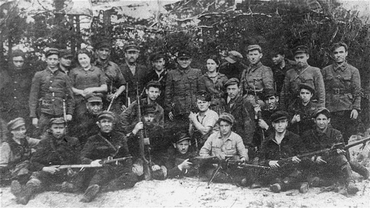
Sep 29, 2009

A Picture's Worth a Thousand Words.


You'll notice the title of this post, and then you'll notice that I'm writing words that really, to be honest, won't do much justice to a simple photograph. My face, in this photo, is swollen. I'm still recovering from my allergic reaction last weekend and the medication I'm on has caused my muscles to ache, my body to fatigue, and my face to swell. So that's me. But that guy next to me?

He is what I consider a celebrity. An academic, spiritual, Jewish, brainy celebrity. My heart beat fast when he was asked my question, among the four that were asked, during his talk this afternoon and when he was walking into the dining hall to eat a delicious kosher meal with about 50 of us, I got sweaty and nervous.

I walked up to him, "Thank you for answering my question, thank you so much for answering it." And he responded with "Well, thank you for asking it." (The question was irrelevant -- about Iran and the Holocaust and how we approach these people, what Elie Wiesel so aptly deemed those who are "morally ill.") I stood nervously. "Can I get a picture with you, please? If it's not too much trouble?" He answered that it wasn't, he put his hand around my back, leaned in, and this is the photo that I have.

A friend from Russia took the photo. I got the camera back from her and noted that in the photo he looked sad, tired. His eyes were saying something timeless, but something devastating. Even when he was smiling in the photos he took with countless benefactors and important persons this evening, he wasn't smiling. His expression always crawled back into a fatigue. He looked tired. I thought to myself, "If I were Elie Wiesel, I, too, would be tired."

But it's interesting how, while sitting and listening to this man -- this icon, this inspiration -- speak, I started to realize that I don't even remember what it feels like to not be Jewish. It was a funny thing to think upon while he was discussing what constitutes a moral society and whether we live in one today. He was discussing the Holocaust, surviving, his friendships and his experiences, how he lives his life and what it means to be moral. All the while, he was relating Hasidic legends, talking about the Talmud, and reciting popular quotes we find from the sages -- all to teach about morality. I realized, in those moments, that to be Jewish is so much of who I am, my efforts to relate to this aspect of Judaism and its history -- the Holocaust -- have stopped being difficult. Have I realized my fullness? I've finally crawled over that bump in the road where I found it so hard to relate to the Holocaust, to the survivors, to that period of Jewish history. In those moments, listening to this man inspire and emote, I felt as if I were listening to my grandfather, my father, my brother, my people.

So when I finally got to shake his hand, and feel his arm around my back, I felt as though I was finally realizing a part of me that was hidden. His hand, which surely had seen so much, felt so much -- both pain and simchas -- touched my back, and I felt so at home near those sad eyes.

Will I ever see Elie Wiesel again? Perhaps. But if I don't, I have the memory of asking him a question, him spending so many minutes answering it passionately, him shaking my hand, putting his arm around my back, taking a photo with me, and listening to me stammering nervously. What a man.

Sep 24, 2009

Sticking it to the UN: Have You No Shame?

Hat tip to Jack for posting this up. I have to say, well put. He puts it perfectly.


"A mere six decades after the Holocaust, you give legitimacy to a man who denies the murder of six million Jews? While promising to wipe out the state of Israel? The state of the Jews? What a disgrace. What a mockery of the charter of the United Nations."

Jan 29, 2009

Truly Unique, Defiance

Last Saturday, after some tenuous debate, Tuvia and I went to see "Defiance ," the much lauded true story staring Daniel Craig, Liev Schrieber and others. For those who don't know, the film is about a group of brothers -- of which I originally thought there were three, but as it turned out there were four -- who build a band of Jewish survivors/partisans in the forests of Eastern Europe (then-Poland, now western Belarus). The brothers -- Tuvia, Zus, Asael, and Aron -- help shelter hundreds in the forests starting in 1941, and at the war's end, there were 1,200 people who had been sheltered in the Naliboki forest.

The movie itself was surprising, compared to many Holocaust period films. I was shocked, and almost dismayed to see some of the violence committed by Jews on non-Jews and Nazis. Now, I want to explain myself so that people don't think I'm being sympathetic toward Nazis. I don't want to give anything away in the film, but there is a lot of vengeance killing, and although we later see that there is reversal where the brothers seek to save Jews, not kill non-Jews, it was incredibly difficult to watch. Many Holocaust movies portray Jews as timid, wanting to fight back but unwilling. This movie is quite the contrary, and this seeming anomaly is portrayed in conversations between Zus and a Russian military officer with whom he comes to work. It was an interesting aspect of the film that made it, well, all the more real.

What's more -- beyond the amazing musical score and cinematics and acting -- the movie became even more real when Tuvia and I learned that he knows members of the Bielski family. In fact, the grandchildren of one of the brothers even went to Tuvia's school! It is truly a small world when it comes to the Jewish community, but the reality of the film was magnified at that point.

This movie is perhaps most unique because we don't see Jews in a ghetto or in a camp -- we see them building homes in the forest, starving in the winter, fighting for their lives, traveling helplessly through bogs and marshes, creating relationships while knowing full well that their former families have died, and more. It's a unique perspective on Jews during the Shoah, and one that I have yet to see portrayed outside of this film.

I applaud the filmmakers, the actors (especially Liev Schrieber, who seems to make his way into every Shoah film on the planet), and those who take the time to view the movie. It's a beautiful story, just beautiful, and inspiring in ways that nothing else can compare.

Nov 9, 2008

P.S.A.

In case you didn't get a chance to read up on Kristallnacht, of which this year marks the 70th anniversary, I found the Yad Vashem site to have some pretty compelling and fascinating reads.
On November 9, 1938, the Nazis unleashed a series of riots against the Jews in Germany and Austria. In the space of a few hours, thousands of synagogues and Jewish businesses and homes were damaged or destroyed. For the first time, tens of thousands of Jews were sent to concentration camps simply because they were Jewish. This event came to be called Kristallnacht ("Night of the Broken Glass") for the shattered store windowpanes that carpeted German streets.
If anything, I am reminded of how we are not all that far away from the events of the Shoah. It is as if it were yesterday. Once it hits 100 years, 150 years, I have to wonder whether it will feel so distant or still close. The world isn't so young when we think about these things. It allows us to remember that we're not so far away from the chaos as we thought.

Jul 9, 2008

I warn you, this post is full of snark.

A hearty mazel tov to Germany on their new citizenship exam!

But, well, let's just say that the region has still not healed and/or come to terms with the Holocaust. How's this evident? Well, the new citizenship test displays 320 questions on German history and society, and not once is the Holocaust mentioned. Because, well, you know, the Holocaust just never happened and definitely has nothing to do with Germany, right!?

What's more, on the question of which religion most influenced European and German culture, among the possible answers are Hinduism, Christianity, Buddhism and Islam -- but no Judaism. Peculiar? Yes, yes I think so. It's sort of big doins, especially in Germany, right? But the questionnaire does proffer questions about Germany's Christian heritage, such as asking what the last four weeks before Christmas are called. (Is this common knowledge? Because, well, I just don't know.)

At any rate, if you're planning on becoming a German citizen, this test will become the standard across the board beginning September 1. Way to wave that flag of cultural insensitivity, Germany! Someday you'll make amends with the past and move along in an adult, mature, sensible, culturally sensitive fashion.

Until then? Well, I bite my thumb in your general direction.

May 2, 2008

Remembering.

Today, readers, is Holocaust Remembrance Day. The Holocaust -- the Shoah -- need not be defined or explained in any measure here. I think that the general readership of my blog knows what happened, when, to whom, where, and why. The day was inaugurated in 1959 and the date chosen was the 27th of Nisan (because the original date, the 14th of Nisan, fell the day before Pesach which is pretty inconvenient as far as choosing dates goes). There are a variety of ways in many different places around the globe that the memory of the 6 million and more is remembered. There are marches, readings of the names of the victims, services, Torah scroll readings, and more.

I wrote not too long ago about how I have always felt distanced from the Holocaust, and I think that it is something that many converts struggle with. Though, there have been and are those who convert because of their closeness to the Holocaust -- a feeling of remorse, regret, sympathy, humanity. For me, I've read about the Holocaust in more ways than I can count, and I always promised myself I would not involve myself in Holocaust studies because those I've met who are actively involved tend to be cynical and sarcastic about life and the general human condition. I've read the books, the laments of "Where was G-d?" And I have no answers, only questions, and I'm comfortable with that.

So today, I take a brief moment to mention someone who shares my name who sacrificed herself during the Shoah to save others.

Chaviva Reik was born as Emma in Shayo Hasso in Solvakia, and she grew up in Banska Bystrica the Carpathian Mountains where she joined the Hashomer Hatzair youth movement. She made aliya to Israel in 1939, where she joined Kibbutz Ma'anit and then enlisted in an underground military organization's parachutist unit. During this time there was a puppet government in place in Slovkia and an uprising was staged to coincide with the entrance of the allied forces, specifically the Red Army. But to squelch the uprising, the Nazis took Slovakia in 1944. After her training, Chaviva and several others waited in Italy to be parachuted into Slovakia, but because of the refusal of British authorities to send a woman behind enemy lines for military operations, she had to hitch a ride to the location with some U.S. pilots. Finally in Banska Bystrica, the group of parachuters set up soup kitchens, community centers, and helped Jewish kids escape to Hungary and on to Palestine. The group also helped rescue POWs. In late 1944, Nazis moved in and occupied Banska Bystrica, so the parachuting group and about 40 other Jewish partisans escaped and built a camp in the mountains but were captured within a few days by Ukrainian SS troops. About a month later, Chaviva and most of the others were shot by the Nazis, while others were sent to death camps. One, Haim Chermesh, escaped to Palestine. It wasn't until 1952 that Chaviva's remains, as well as those of the others, were returned and buried in Mt. Herzl military cemetery in Jerusalem. Now, Chaviva Reik's name adorns an institute, a ship, and numerous streets.

So here's to Chaviva Reik, on this remembrance of the Shoah. I tend to be more reflective about the Holocaust on Tisha B'av (which is in August), so perhaps I'll have something more to add then. But until then, here is a video of a memorial prayer for those lost to the Holocaust.


And perhaps, just one last thought, something to consider when we remember the Holocaust and the tragedies that have befallen Jew and non-Jew alike, a quote by the Jewish writer Sholem Asch, "Not the power to remember, but its very opposite, the power to forget, is a necessary condition for our existence."

Apr 7, 2008

Hrm ...

I just can't be okay with these videos. It's another reminder that the Holocaust is the universal gauge for oppression -- it's exploited in that matter, and I think it's unfortunate. There are so many other incidents -- Darfur, Rwanda, Serbia, everywhere. I find these new commercials to be, well, exploitations. These are just two of MTV's new commercials that end with "The Holocaust Happened to People Like Us." Thoughts?


Design by Free WordPress Themes | Bloggerized by Lasantha - Premium Blogger Themes Powered by Blogger | DSW printable coupons