Showing posts with label yom kippur. Show all posts

Oct 6, 2011

Like a Shofar, Raise Your Voice

On a whim, while failing to fall asleep the other night, I decided to read one of the portions of the Yom Kippur reading: Isaiah 57:15-58:14. I was struck by the following, because I think it makes aware something that we probably don't consider when it comes to fasting.

In this portion, from 58:14, Isaiah is sharing G-d's words.
Call with a full voice, do not spare, like a shofar raise your voice and relate to My people their transgression, and to the house of Jacob their sins. Yet they seek Me daily and they wish to know My ways, like a nation that performed righteousness and did not forsake the ordinance of its G-d: they ask Me ordinances of righteousness; they desire nearness to G-d. 
And the people ask: "Why have we fasted, and You did not see; we have afflicted our soul and You do not know?" And HaShem answers with a question about how we fast and why we fast.
Behold, for quarrel and strife you fast, and to strike with a fist of wickedness. Do not fast like this day, to make your voice heard on high. Will such be the fast I will choose, a day of man's afflicting his soul? Is it to bend his head like a fishhook and spread out sackcloth and ashes? Will you call this a fast and an acceptable day to the Lord? Is this not the fast I will choose? To undo the fetters of wickedness, to untie the bands of perverseness, and to let out the oppressed free, and all perverseness you shall eliminate. Is it not to share your bread with the hungry, and moaning poor you shall bring home; when you see a naked one, you shall clothe him, and from your flesh you shall not hide?
HaShem says not to bow your head and afflict yourself so much as to open your eyes to the true reason we fast, to acknowledge the wickedness and neglect of our people that we pursue day in and day out.
Then your light shall break forth as the dawn, and your healing shall quickly sprout, and your righteousness shall go before you; the glory of the Lord shall gather you in. Then you shall call and the Lord shall answer, you shall cry and He shall say, "Here I am," if you remove perverseness from your midst, putting forth the finger and speaking wickedness. And you draw out your soul to the hungry, and an afflicted soul you sate, then your light shall shine in the darkness, and your darkness shall be like noon. And the Lord shall always lead you, and He shall satisfy your soul in drought, and strengthen your bones; and you shall be like a well-watered garden and like a spring of water whose water does not fail.
And this part I really like, because it says exactly what we need to do; HaShem doesn't mince words. He's not mealymouthed about what is expected of us.
And [those coming] from you shall build ancient ruins, foundations of generations you shall erect, and you shall be called the repairer of the breaches, restorer of the paths, to dwell in. If you restrain your foot because of the Sabbath, from performing your affairs on My holy day, and you call the Sabbath a delight, the holy of the Lord honored, and you honor it by not doing your wonted ways, by not pursuing your affairs and speaking words. Then, you shall delight with the Lord, and I will cause you to ride on the high places of the land, and I will give you to eat the heritage of Jacob your father, for the mouth of the Lord has spoken.
It's easy as pie. So often we look to fast days as a means of pain and suffering for our own souls, for our own being. But the truth is that Yom Kippur and its fast are a means of taking our inward obsession outward and to acknowledge the indifference we have to those around us, to the hungry and empty souls that need to be sated, to observe the Sabbath and to make for ourselves a path of repair. 

I want to wish you all a tzom qal (easy fast), which doesn't mean I hope it's a walk in the park for you, but that I wish that you all have come to a point of inner reflection over these Days of Awe so that when it comes to standing before HaShem and asking to be sealed in the book of life that it means something and that it is more than mere words and wishes, that it is based on introspection and action, so that for HaShem it is easy -- easy to seal you eternally in the Book of Life and to the House of Jacob. 

Sep 25, 2011

An Unanticipated Start to Renewal

This week, we begin the High Holidays of Rosh Hashanah and Yom Kippur, holidays that are juxtaposed with a bittersweet sensation of happiness and reality. The book of life, the book of death. At this time every year, I beg for new beginnings, for insight, for clarity, and it's an appropriate time of year because it's also the season of my birthday, which happens to be Rosh Hashanah on the Hebrew calendar and September 30 on the Gregorian calendar. I'd really wanted to do something jazzy like Kate did for her birthday, where she listed tons of awesome facts -- known and unknown -- about her from the most minute to the deep and meaningful. Had I written that post a month ago when she posted her's, I probably would go ahead and post it anyway, but I can't put myself in a mindset of cataloging and celebrating these 28 years of life that I've been given. But I'm distracted.

Ever since I was a kid, I'd always wanted to be married by 27. I'm not sure why, but it was some kind of goal that I could work for and 27 seemed like enough time to sow my wild oats and then settle into a life of marriage, have kids and be someone's wife. So I hit that goal, with four months to spare.

What I never anticipated, however, was being divorced by 28. I also never anticipated moving back to Denver -- where I lived six years ago for a summer at The Denver Post -- alone.

This blog has watched me on a unique journey into and through Judaism as a convert, and now, I suppose, it will document what it means to be a single, converted, divorced Orthodox Jewish woman pushing 30 living in the Rocky Mountain state.

Why Denver? Well, I didn't have this blog back in 2005, but if I did, you would have heard me sing the praises of Colorado as the healthiest place on earth. The moment my wheels hit Colorado, I felt the need to eat healthy, to be healthy, to feel healthy. I went through a heartbreak there, but it didn't smack me in the face like it did elsewhere, because I was mentally and emotionally healthy. I was able to cope and move on. When I lived in Denver, I went running and walking, I ate fresh vegetables and maintained a mostly vegetarian diet, I explored the state, I got out. I did things. I was happy, I was healthy, I was positive about my future and confident in who I was. Everyone keeps telling me Denver's a horrible choice because there are no single frum folk there. To that, friends, I say, "I'm not interested in dating at the moment. Seriously?"

Why not Israel? Divorce is a big enough shock to my system right now. I need a change, so I'm starting small with a move to Denver where I can regroup, clear my head, and find some inner peace. The balagan of Israel is too much for the tender state of me right now, so stay patient. I haven't ruled it out. After all, the world is my oyster at this point.

What happened? As much as I know y'all want to ask this question, and as much as I want to answer it, this blog isn't the place for it. Evan (aka Tuvia) and I are divorcing amicably after spending most of our marriage trying to make things click into place. Not everyone works out in the way that you think or hope they will, and that's the crapshoot of life, folks. I was at an all-time emotional low when the decision was made, and since then -- a mere couple of weeks -- I've already started to feel like there's a silver lining in this. Gam zu l'tovah. (Even in this there is good.) Just know that Evan and I gave it all we had, and the marriage didn't work out.

What now? Well, I'm on the hunt for a Denver job. So if you know someone, let me know. I've applied for a few, and one responded that I'm overqualified, so I'm afraid that this is going to be a constant refrain that will frustrate the bejeezus out of me. As for school, it's on hold for now with the option to return in the spring, but I'm not sure what's going to happen there. I think in the past year, I outgrew what I thought the program could provide me. I want to continue learning, so maybe I'll hop off to Israel to seminary or something. Seriously, world = oyster. But right now, I really need to find work in Colorado -- so help a Jewess out!

I suppose I have a lot to think about, and you're all along for the ride. Why I chose to uncover after the divorce, what the Denver community is like, and, most importantly, what do I want out of life?

Thus, the High Holidays -- a time for renewal -- couldn't have come at a better time. Or maybe HaShem had this all in the books. After all, everything happened so quickly, the move, the divorce, everything. I felt almost forced to be in Denver by the High Holidays, and it has happened. My 10Q email arrived the day of my get and reminded me of what I foresaw in 5771, and it was foreboding in a way. What is HaShem trying to say to me? And what does it all mean?

Stay tuned, folks. It's going to be an interesting 5772.

Sep 17, 2010

Yom Kippur Cometh!

My fondest memory of Yom Kippur -- if you can have a "fond" YK memory -- is from my Reform shul in Nebraska one year long ago. Or not so long ago. But the thing is that our sanctuary was located on the main floor of the shul and the social hall and kitchen were downstairs. During the afternoon YK services, people would begin preparing the goods for our break-the-fast meal. Now, you can imagine what this was like. We'd spend probably two to three hours, the hardest of a fast day, smelling the wafting scents of delicious goodies up the stairwell from the kitchen. It was unbelievable. Difficult. And, inevitably, very amusing to us.

Yom Kippur, for me, is tough. I'm not a good faster, I get dehydrated easy, and migraines come at me the moment I wake up on the morning of a fast. But Yom Kippur, to me, is something worth powering through. It's necessary, it's the ultimate day of purpose. The service is long, soul-crushing, perhaps, but ultimately, there is something in the day for everyone. Even if it is a word, a line that strikes you, something that sings to your soul and moves it from crushing to freeing. They call these the High Holidays, because you're supposed to get high. Not on weed, folks, but on life, HaShem, Judaism, you name it. Get high in your mind, in your soul, in your heart. For me? I need this right now, and you should, too. This day comes once a year, so you have to make it right for you.

And, while you're getting your Yom Kippur thoughts on, please check out this amazing video "Yom Kippur: Overboard (Jonah's Song)." Note: This song has a very "Christian Rock" feel to it, but the animation and message are perfect.


An easy fast to you all, and a g'mar chatima tovah! Check in after Shabbos for Haveil Havalim, the newest edition, here on the blog!

Sep 15, 2010

The Bad Day Post

Very rarely do I let the words, thoughts, opinions, or -- in some cases -- knowing glances shake me. LiveJournaling and then Blogging has forced me to grow a thick and necessary skin. I'm happy about this. I'm even proud of it. I consider myself one who is driven and passionate. What I dream of, I seek, what I seek, I find (most of the time), and what I find I get really, really flippin' excited about. I am a passionate person. I am the kind of person who gets geared up talking about Twitter's ability to create communities between people who likely wouldn't give one another the time of day on a street corner. I get all tingly and excited when I talk about my blog and how I've managed to help people get through the conversion process, how I've been able to calm fears, how I've been able to turn around the irrational on the web for those who feel disenfranchised, confused, lost, and on the verge of walking away from everything Jewish. I like that people know about my blog, because, in my mind, this means people get what I'm doing, what I'm saying, what I'm trying to create with my words. I assume that people understand that when I talk about my blog and how many visits I get each day and how many emails I get from readers that I'm not tooting my own horn (although, I suppose in some way this is my way of attempting to help "fix" something that I failed to "fix" in other parts of my life, which is gratifying in a way that I don't expect anyone outside of those who know me more intimately than this blog can aspire to delve). I blog and Twitter and evangelize about Social Media because I see its power. I see its power to teach, to ingather, to calm, to stifle, to ... breathe. To breathe some kind of sanity and kinship in all of us. To bridge gaps and create a New Community. A better community. Not a happier or more equal or wealthier or more satisfied community, but a better community. Better in the sense that we're using these technologies to put ourselves one mile marker ahead of where we were before these technologies. After all, if we can't make ourselves better, then what's the point? Luckily, for us, "better," is relative. But it means ahead of where we were. Different. But different better.

But I'm also passionate about Judaism. Everything that that small word captures. Even more so, everything that the three letter word JEW encapsulates, which, let's be honest, is more than any human can grasp. As a result of this, I'm that student. I'm that student that sits in class and answers every question because I hate waiting for other people to respond. I have a five-second rule, that I sometimes expand to 10 seconds. If there's silence, if people are staring at their books or papers (the class, please don't talk to me move), I speak up. As a result, I'm the dominate engager in almost every classroom I'm in (save the classes where the topic os foreign, such as sociology). The point, I guess, is that I get psyched. I want to talk about Jewish things and Jewish communities, and talk about professors who've said this or that -- when I think it's relevant or will give the in-class professor better perspective as to what I'm saying. I like to dialogue, I like to ask questions, I like to get academically dirty. It's who I am, and it's who I've always been. THAT is the one thing I've always had, outside of what everyone else said or thought or assumed about me, I've had academic engagement. In the classroom, I'm someone. I'm someone more than I am online, at least in my mind.

The reason I'm writing all of this is because I'm frustrated. Nay, I'm dejected. In one of my classes, that knowing glance showed up between a few of my classmates when I piped up with a question and mentioned the name of a professor who was connected to the point I was trying to make. That glance, which I spotted out of the corner of my eye, which killed me, which made me want to shut up and not engage, has left me feeling, well, blah. Is it wrong to engage? To be eager? To be passionate about something? So passionate that you want to ask questions and engage and push and interact? Am I a kiss-ass because I know things? Because I have a background? Because I can hold a conversation with a professor on Greek Esther or a tendency toward revisionist approaches to Jewish history?

Okay. You see, my entire life, I had this problem. And evidently, I still do. I'm the kind of person who wants to fix things, fix people, fix situations. Make things better. I do this by blogging about my personal, intimate thoughts (although, seriously, there's a lot y'all don't get here on the blog) and by learning. I learn to educate others, to better myself, to better the world around me through the light of LEARNING. I am passionate about both of these things. I am not a great ego about them. It's just who and how I am. Other people have judged me my entire life for my weight, my eczema (seriously, this ruined elementary school for me), my religious views, the way I dress, etc. Most people get over it. They grow up. They mature. They realize that life is about more than the details and pleasing other people. The one thing I was never judged on, was my passion for learning and having a conversation. And now, now that I'm here and in this new environment, I'm feeling it. I'm feeling the "you talk about it too much" and "who cares" and "get over yourself" stares and undertones of conversations. Suddenly, this one aspect of me, this aspect that I have always owned fully and completely, is wrong.

And, like I said, I'm not the kind of person to let people drag me down. I've become a much more confident person than I once was. When I came to Judaism, I came to myself. I found confidence and strength. And now? I'm worried. I'm worried that these new classmates of mine think I'm someone I"m not, that they have created assumptions, that these Jewish cohorts of mine, think I'm all ego and nothing more.

Is it wrong to be passionate? Is it wrong to be excited? Is it wrong to be me? Do I exude ego and feigned passion?

On a related note to my "Bad Day Post," at the end of my class this evening, the professor suggested that an unmentioned and unconsidered aspect of Jewish history is the idea of family, a shared Jewish family where we're all connected, across denominations or streams, and that it is family that brings it all together, no matter what individuals or groups say or do. An Orthodox rabbi could marry the daughter of a leading Reform rabbi and the world doesn't crumble in on itself. Family, after all, is the undercurrent of Jewish identity and history. The question, of course, that I immediately wrote in my notes was, "What about the convert?" There is no shared family, no connections (well, for those of us that come to this completely blank, without any genealogical tie to be found). Just the soul, the neshama. Is that why it's so tough? Is that what makes the convert sort of a fringe member of the Jewish family? Because we aren't family?

I try to keep it positive here, but I'm having a rough night. Forgive me my Debbie Downer mood (that'll lift you up, go watch SNL), especially before Yom Kippur. In these Days of Awe, reflection is necessary, but this isn't the kind of reflection I want to be doing. I'm just filled these days with a sense of figuring out who I am now. With a sheitel and a new home and new friends and big dreams and excitement about the New Community out the wazoo (whatever that means ... what is the wazoo anyway?).

I'm not looking for y'all to lift me up or tell me I'm great or that people who aren't me suck or anything. This is one of those "hear me, see me, throw me a virtual hug" kind of posts.

Something more interesting for everyone hopefully will come before the Yom Tov. If it doesn't? An easy fast (tzom qal) to you all! And, you know, I'm sorry if I've wronged you or hurt you or done anything in any way to make you think "geepers, Chavi, you suck."

Sep 23, 2009

When I Call, Will You Answer?

Every day (or almost) I log on to my blog, sit down and write something. I pour my soul out onto the pages of this blog, and for the past three-and-a-half years, and for every day of these past several years I've seen the words written there, below the title of my blog: Sh'ma HaShem, qoli eqra v'chaneni v'aneni. It's funny because I was thinking about it tonight, sitting here, trying to make myself go to sleep, and I realized I'd forgotten what the phrase meant or why I put it there. Let's deconstruct.

Sh'ma HaShem: Hear, G-d
Qoli eqra: My voice cries,
V'chaneni:  Be gracious to me,
V'aneni: Answer me.

Source? Psalms 27:7. We read from this Psalm every day during the month of Elul. I can't believe I'd gotten so lost in the constant of seeing it there that I forgot what it was, where it was from, how important the phrasing and words are.

Now, I went back in the annals of this blog and found a really fascinating post (am I tooting my own horn here?) that I'd written in late August 2006. I was four months out of a Reform conversion, and almost three years into studying Judaism seriously. Even then, at that point, I knew that I wasn't content with a religion of do-do-do without feel-feel-feel. I'm not saying that Reform Judaism was that, but what I was seeing and experiencing was that. I was never that kind of Jew.

A morsel of that post:
I read an article in Tikkun about a guy who was at a bookstore in Tennessee when he ran into a college-age kid who was browsing the small Judaica section in a Border's books. He observed that the kid would pick up a book, flip through it and put it back as if he wasn't really looking. The guy walked over to the collegian and they got to talking about what this kid was looking for -- G-d. The collegian said that G-d was missing from so many books. That G-d is almost devoid of meaning in modern Judaism -- in nearly all followings therein. It got me thinking. The one thing I always detested about "religion" was that it lacked rhyme or reason. Things were done because "that's just what we do." You go to church on Sunday because that's what a good Christian does. You daven three times a day, because that's what a good Jew does. You go to confession, becuase, well, that's what a good Catholic does. The WHY gets lost in translation. That's also what drew me so much to Judaism ... the idea of rabbis across centuries arguing things down to the accidental ink blot on a specific Talmudic trachtate. It is, enlightening and brilliant the amount of discussion and argument that goes into Jewish thought. But it feels like we're missing something. G-d?
When rabbinic and Talmudic Judaism was born, G-d almost disappeared from the Jewish map. It makes you wonder of Adonai is sitting idly by, waiting for Jews everywhere to realize that when they left for Summer Vacation, they left good ole' Adonai sitting on the front porch stoop. Many, many years later, there Adonai sits. Waiting. And what are we doing? Well, I'm not sure.
I know what I'm doing. I'm making a concerted effort to "rekindle the flame" as a popular phrase within the Jewish literary circles quips. I carry G-d with me more than I ever did when I was wrestling with organized religion or my fear of life after death. It's almost an unconcious hum in my head, always keeping me at ease. It's the moments when I'm ill at ease that I seem to cry out, truly and deeply, for strength, reciting the words in the Siddur (page 75) that my rabbi and I discussed so often (cannot rebuild a bridge, but can mend a broken heart). I don't want to be a Jew-by-habit, I'm a Jew-by-Choice, who chooses to create a holy bubble where G-d is more than just four letters in the holy books.
-------
So each morning when I rise, I'll rebuild the figure near the bimah and the shofar, the sound it makes calling us to repentence, to focus on heshbon ha'nefesh -- taking stock of oneself, the soul, reflecting and asking for Divine forgiveness. I'll recite the Psalm, calling Adonai to hear my cries, and I will think of Moshe, ascending the mount for the third time on this day in 2448. I will find my kavannah, and I will keep my beloved close, as my beloved keeps me close.
I think I knew where I was going back then. I knew what I needed, and that hasn't changed. Finding that place, that "holy bubble" that I mention is a constant pursuit of mine. Especially this time of year, when I think about calling out to G-d, asking G-d to hear my voice, to really, truly hear me. To be gracious to me.

And most importantly? To answer.

Rosh Hashanah, I Wish You Were.


Every year, no matter how hard I try, the holidays -- be it Pesach or Rosh Hashanah or something else -- sneak up on me. I start reading and preparing, analyzing the meanings behind fasts and actions and how we daven, far in advance of the holidays. But then, out of nowhere, it is upon us and I'm lost. Lost in the music, the prayers, the people, the noise, the chaos. And this Rosh Hashanah, it wasn't enough that the days were full of all of these things, no, what was added to it was an incident that will probably be one of those "Hey, remember that year where Chavi didn't come to shul and when she did she looked like she'd been knocked out in a boxing match?" kind of memories.

I was staying in a new environment, and despite my best efforts -- bringing my own pillow cases, my own allergen-free pillow, my own pillows and body wash -- somehow I managed to develop a violent allergic reaction to something still unknown to me. It started Saturday morning when I woke up, progressed throughout the day, and culminated around 2 a.m. Sunday morning with a swollen-shut right eye and a left eye on the way there. In the morning, I didn't make it to shul because I'd been up all night wiping my eye and making sure my face didn't swell too much and that -- most importantly -- my throat didn't swell shut. Two people, two amazing friends, even made their way to the apartment to wake me up and check on me (they didn't know the situation). When I finally made it to shul, moments before shofar, I was surrounded by friends dishing medical advice (real doctors!) and handing me antihistamines. The swelling in my eye was down drastically when the service ended a few hours later, and by the evening my eyes were looking better and my skin was bumpy like the peel of an orange and red as can be. Did I mention how itchy it was?

Even today, my face is bumpy, red and blotchy, and I just have to hope that the Prednisone prescribed to me on Monday will really kick it up and make this go away. For someone like me -- with an always-clear complexion -- it's frustrating, disheartening, and depressing. I hate to be vain, but it's more than that. I was embarrassed to be at shul, and later, in class. It's hard to focus when your eyeballs are itchy and your skin is peeling and flaking. It's disgusting and distracting.

I tried so hard to focus on Rosh Hashanah services this weekend. Our chazzan, flown in from Israel for the High Holidays has a voice of honesty, passion, depth. I found myself, despite the state of my face, focusing on his arms as they swung about in song, his shukeling, his devotion to the words, to their meaning. He managed to find a space in his own world to bring his soul toward G-d, and despite all of those people in the sanctuary chattering and reading novels and paying no attention, he was real, he was true. His words were something special. I found that, when my face was itchy and looking horrible, it was easier for me to focus on the chazzan and his words -- more easy, that is, then when I'm normal, healthy, and focusing on the babblers around me.

[As an aside, the dinner I went to Friday night was at the home of some Israeli friends of mine (note: more like family!), and the chazzan was there as well. The chazzan, whose English isn't too stellar, allowed for our hosts and myself to speak a bit of Hebrew, and for Tuvia to nod along joyfully. It was so interesting to be in a household where we bounced back and forth between Hebrew and English, and it was absolutely something special for me because it gave me practice listening, comprehending, and even speaking a bit.]

I did, however, have an interesting conversation with friends about the state of affairs at shul over the High Holidays, and I have to agree with them -- to a point. They were talking about how for some of these people, these twice-a-year Jews, it's a huge step for them to make it to the shul for Rosh Hashanah to hear the shofar (which, in truth, is the major mitzvah of RH anyway). Although they drive me nuts, grate my cheese, and make it all-around more difficult to listen to the chazzan than a swollen melonhead, they're there, and that's something. That they chose to come to an Orthodox shul, where the only sound you'll hear is the purest voice of the chazzan, is also something. There was no production, no lights and choirs and extravagant displays of High Holiday excess. No, it was simple. It was chaos. It was organized, beautiful, chaos. They didn't extend the walls to pack in hundreds of people -- it was men and women smashed into the sanctuary listening to a chazzan with pipes of gold, pipes with a direct connection to the divine. And overall? It was beautiful. It was how I've always pictured the service. Simple, chaotic, perfect.

Interestingly, a friend suggested the following advice: If there are days of the year to skip shul, it's the High Holidays. It gave me a chuckle, but I understand. The pure volume of people there elevated the chattering behind the chazzan's davening. But I keep telling myself -- they were THERE.

I feel as though I was cheated a bit, however. Because of the state of my face. People kept checking up on me, asking if I was okay, making sure I could handle to be in the sanctuary during davening. So? I focused my energies on the shofar, and I was reminded of probably the one thing I miss most about my old Reform shul: the girl who blew the shofar -- she, she had pipes. That long note? She could blast it for minutes. Her skills were incomparable. Unimaginable.

But it's the sound of the shofar that brought everyone to quietude. The rabbi wouldn't let the shofar be blown until the entire crowd was silent. Children came running in from every direction. Women silenced their chattering. Men turned toward the bimah. The rabbi read the sound, the man blew the shofar. And it was beautiful. The sound that I hear in my dreams, that powerful sound above all quietness that connects us all on these days of Awe. Silence and beauty. Silence and loudness. It's that sound of creation, bringing order through noise to the quiet.

So here I am, in the days of Awe, contemplating whether my face will clear up and stop itching in time for me to enjoy Shabbat and Yom Kippur. To really focus on the reason for the season (if I can say that, that is). We have friends, the illustrious @SusQHB and @RavTex coming up for the weekend, and I'm so stoked. I love sharing my community with others, because it's the most amazing community out there. I think this weekend was the most perfect example of the gift I've been given -- people cared enough to check on me, people ran to their respective houses to bring me medicine, people offered up their homes to me to rest in the afternoon, their beds to rest my swollen head, food to comfort me, and jokes and calm things to make me less worried. These people, this community of mine, is a family unlike any other that I've known. Eizeh mishpacha!?


Thus, 5770 came in with an interesting bang. They say that how you spend the days of Rosh Hashanah will define your year -- if you nap on RH, you'll have a sleepy year and the like. I have to hope, with all my heart, that this won't be a year of pain and suffering. I have to hope that rather, it will be a year of friendship, community, family, and connections. A realizing of my dream to be an Orthodox Jew in all halakic senses of the word. So may I be sealed, for all my efforts and passion, in the book of life. And may you all -- my extended family through blogging, Twittering, and many other avenues -- be sealed in the book of life for a healthy, happy, productive, and peaceful 5770!

Sep 12, 2009

If You Can't Make it to Shul for Kol Nidre ...

Although I'll be offline and MIA during Yom Kippur, this might interest some of my readers. I think it's great that someone is willing to reach out the community members that have to work or can't get to a shul for the High Holidays. I got this information from the one and only @EstherK, so thank her for spreading the word. Here's some tidbits from the press release.
Outside of the biblical gathering at Mt. Sinai, the annual televised Kol Nidre service that streamed online to more than 220,000 people last year may be the world’s largest single Jewish service ever.
On the evening of September 27, JewishTVNetwork.com, a vibrant global broadband community connecting Jews around the world, will stream its third annual Kol Nidre service, which marks the beginning of Yom Kippur. In its first year, JTN streamed the service to about 30,000 online viewers. Last year, the live service originated from the leading Jewish organization – Nashuva – led by Rabbi Naomi Levy and more than 220,000 online viewers in North America and around the world tuned in. This year the numbers may go higher, a testament to the number of Jews who either cannot physically get to a synagogue or are unaffiliated and seeking something spiritually Jewish to connect to.
Nashuva offers a passionate, highly engaging service complete with a dynamic, seven member, multi ethnic, multi racial “band” that adds inspirational, modern takes on traditional prayers and hymns. Nashuva is based in Los Angeles and is as much a social action organization as it is a house of prayer.
With the intent to connect with Jews of all denominations, Levy founded the Nashuva organization to reach people who may not be part of the conventional Jewish structure. Unlike any other conservative Rabbi, Levy presents a whole new approach to Jewish prayer that includes elements of global sounds, meditation, dance and translations of Hebrew prayers that are rarely experienced.
“Like JewishTVNetwork.com, Nashuva uses an innovative approach to bring the Jewish experience to the greater Jewish community,” said Jay Sanderson, CEO of JTN Productions/JewishTVNetwork.com. “The overwhelming response to last year’s service demonstrated that there is an incredible demand around the world to connect and create a dialogue.”
Named as one of Newsweek’s “50 Most Influential Rabbis in America,” Rabbi Levy is a best selling author whose spiritual guidance has been featured on national broadcast shows like Oprah and Good Morning America.
“Our experience last year, of reaching so many people through JTN, was exceptionally rewarding,” said Rabbi Levy. “I have made it my life’s work to provide an engaging Jewish experience for all and the best way to reach a global audience is through the Web. This was not possible just 10 years ago, but now through this medium, we can reach people most anywhere and that is both humbling and exhilarating.”
JewishTVNetwork.com’s High Holiday content will allow people throughout the world to experience and learn about Holiday rituals and traditions of the Jewish New Year with hours of new and engaging content. Online users can prepare for the holiday and learn new twists on their favorite dish, watch renowned Rabbis discuss the importance of the holiday and discover fun crafts the whole family can enjoy.
Follow @JewishTVNetwork on Twitter for more information!

Oct 9, 2008

5769: Yom Kippur Reflections

In my life lately, it appears that everything is interestingly coincidental. It leaves me wondering about bigger things at work. What was it this time? The rabbi's sermon at Yom Kippur morning services echoed my recent post on the statements of the Ger Rabbi. When he started speaking it, I grinned hugely, nudged Evan and felt completely proud. I need to email the rabbi to thank him for inviting us to services, not to mention for being so like-minded on one of the biggest sermons of the year.

This year, for some reason, Yom Kippur resonated more deeply, more thoroughly than all of my short years in the tribe. The fast went more smoothly (up until the point where I attempted to nap and didn't so much and woke up grumpy as all get out) than in all past years combined for some reason -- was it the weather? Being in shul more? Where I was mentally and emotionally? For some reason, the moment I stepped into shul for Kol Nidre after the pre-fast stuff-your-face fest at Hillel, I was prepared. I hadn't felt prepared before, but it just hit me the moment the service started that I was in sync with the day. The melodies and words came to me with ease, which is something I always worry about with those once-a-year celebrations in the Jewish calendar. I am a Shabbos maven because I get a dose nearly every week. But the holidays are a point of frustration for me much of the time. But this year, it was if the rabbi's words were zipping through my mind before they came out of his mouth. It probably sounds incredibly zen-like, but that's not what I'm getting at.

I felt a connection. I felt heard. I was atoning, speaking to G-d, seeing my name in the book of life.

So the low-down: Kol Nidre was at Hillel. Then morning services were at the conservative shul in West Hartford. I finished off afternoon/evening services back at Hillel.

Services in West Hartford were absolutely magnificent. Up until when the organ and choir busted out during the Torah service. Up until then, an elderly cantor (not the usual fellow) was moving the service along in a beautiful stream of prayer. I could have listened to him all day. The rabbi greeted us on our way in (and can I just say I LOVE this rabbi?), and the shul slowly filled up throughout the morning. If there's one thing I've learned though, it's to show up early for the prime seating in a big shul like that. I already mentioned the rabbi's sermon, so I won't go there, but we left right before Yizkor. I'm never sure whether to stick around for Yizkor, but my experience tells me that unless I've lost a parent or child, that it's more for mourners than people like me. I did realize, though, shortly after leaving that my grandfather did die this year and that maybe, just maybe, I should have stuck around. It probably would have made the rest of the day easier on my sleep issue, too. Services back at Hillel went fairly quickly (a mere two hours!), and I spent a bit of time up at the ark speaking quietly with G-d right before it was closed and Yom Kippur tied up. The shofar was blown and my heart sang, my lips curled into a smile, and I suddenly lost my light-headed/head-achy feeling.

The words of the prayerbook seemed to do more for me this year. I read the words and they did more than flip around in my mind for a few minutes. They echoed and swirled about throughout the day and continue to resonate in my heard and mind. The melodies enchant me and the entire idea of placing prayer above all else -- above all earthly and physical needs -- through fasting brings me to a beautiful place.

Essentially, I feel like I'm starting the new year with weights off my shoulders, my soul feeling light and as bright as the sun in the day and the moon at night. I know that my blog posts of late have been confused and frustrated, and I still am in that state of mind -- it's part of the Underconstructionist philosophy, you know. But I feel like G-d will be with me no matter how I walk the path, as long as I am walking forward and not backward.

And now? We prepare for Sukkot ! There will be THREE or FOUR sukkahs on campus, so I'm pretty stoked. Mostly because there will be one out here in the graduate quad for my using pleasure. The interesting thing? I've never observed Sukkot in any way shape or form before. I've always wanted to construct a sukkah, and when I was living in DC and saw sukkahs in people's front yards I was so jealous.

Until then, I wish upon you all the connectedness I feel with my Judaism and that you all continue on a forward-moving path.

Oct 7, 2008

Revisiting the Ultimate Goal.

Okay, I take it back. Maybe I did figure it out. Roughly a year ago, around Rosh Hashanah/Yom Kippur I wrote a very simple post, "The Ultimate Goal ." What was it?
"I have set G-d before me at all times." (Psalms 16:8)
Now, the thing about this is that it's a consistent goal. A perpetual necessity for me. For those keeping score at home, the rest of Psalm 16:8 reads: "... surely He is at my right hand, I shall never be shaken."

So then on another note, just last night I had a dream about Hasidic rabbis teaching me (Hasidim being a recurring theme in my dreams over the past several months), though when I awoke I couldn't remember what I had been taught. After sharing this dream on Twitter, a friend kindly replied to me simply with a reference to Psalm: 16:7. What does this verse say?
I bless the Lord who has guided me; my conscience admonishes me at night.
Now, I've been homing in on a lot of coincidences lately. My friend's Rosh Hashanah miracle story truly touched me in a way I cannot describe, and just now, well, let me explain. The note from my friend about Psalms 16:7 this morning I found particularly interesting, but hadn't thought much about it other than that it was a fascinating approach to my recurring dreams. But then, while thinking about Yom Kippur and pulling up old blog posts, and happening upon this one with Psalm 16:8 from almost precisely a year ago (one day off), I was struck.

So perhaps Psalm 16 is my song.
Protect me, O G-d, for I seek refuge in You.
I say to the Lord,
"You are my Lord, my benefactor;
there is none above You."
As to the holy and mighty ones that are in the land,
my whole desire concerning them is that
those who espouse another [god]
may h ave many sorrows!
I will have no part of their bloody libations;
their names will not pass my lips.
The Lord is my allotted share and portion;
You control my fate.
Delightful country has fallen to my lot;
lovely indeed my estate.
I bless the Lord who has guided me;
my conscience (literally kidney) admonishes me at night.
I am ever mindful of the Lord's presence;
He is at my right hand; I shall never be shaken.
So my heart rejoices,
my whole being exults,
and my body rests secure.
For You will not abandon me to Sheol,
or let Your faithful one see the Pit.
You will teach me the path of life.
In Your presence is perfect joy;
delights are ever in Your right hand.
For those wondering, the kidney is supposedly the seat of the conscience. But really, this Psalm is how my heart beckons -- G-d will not abandon me, He will teach me the path of life. And it is with this that 5769 will be a year of rejoicing, security, delight, and joy.

I bid all an easy fast, and may we all be inscribed in the book of life. Gemar chatimah tovah, and good yontiff!

Oct 6, 2008

Will My Unbalance be Heard?

The Jewish Treats blog shared an important little snippet today that I wish I had been paying more attention to over the past few days: "During the time between Rosh Hashana and Yom Kippur, G-d pays special attention to our prayers. Go ahead, talk to G-d; He wants to hear you!"

I then began thinking about the idea of making resolutions, like we do on the Gregorian New Year (that is, January 1 and shortly just before). It doesn't seem to me like a very High Holy Days thing to do, making resolutions. Maybe I'm missing something, but it has never really been about making resolutions. Is the Jewish New Year meant for resolution-making? Maybe I'm wrong to do it, but when I do do it, I make resolutions to start on January 1. It's never really a conscious decision, it just works that way. But this year, it is more of a deliberate decision. And I feel pretty horrible about it.

You see, I'd like to say that I'm starting 5769 out right. Keeping Shabbos completely and going kosher and doing all these things I've been trying to tack on for so long now. But it isn't happening. Yes, I went to services on Friday, but then we went out to dinner and then to New York to see a show. And this week? Driving down to the Poconos, though we are going to shul. And this isn't how I want to carry myself, but I can't seem to figure things out. I seem stuck. I want it all. I want everything! I have a boyfriend, and being Shomer Shabbos would relegate our relationship to Sundays, and he works many Sundays. School, Shabbos, Boyfriend, feh.

I just have to wonder how G-d will review my prayers these few days before Yom Kippur. Will He hear me? Will I be inscribed in the book of life? Is it even worth it? When even I know that I'm not living rightly?

I feel like the delicate balance I am trying to maintain is eating away at my conscious. If I weren't in school or weren't in Storrs or weren't doing this or doing that it'd work out. But conditionals always seem perfect in our minds.

It never fails to amuse me that my zodiac sign is Libra, the scales of justice, and the moment I feel perfectly in balance is when the scales seem to tip, creating unbalance, unsettling the mind and tilting my comfort.

Stained-glass window from Lower Merion Synagogue in Pennsylvania. 

Oct 3, 2008

The Round-Up!

So, prepare yourself for a hodge-podge post. Start your engines!

Evan and I are going back to the Conservative shul we went to a few weeks ago in West Hartford. We're hoping that we can talk the rabbi into sneaking us in to Yom Kippur services on Thursday. So cross your magen Davids and hope for the best. It's a nice shul, and I'm guessing more people will be there this Shabbat since it's between Rosh Hashanah and Yom Kippur. Alternatively, it could have a reverse affect and no one will be there. Either way, I'm stoked for more real-shul time.

I happ'd upon an article over on the Orthodox Union site about Yom Kippur/Kol Nidre, and I thought it was worth sharing: "You DO Have a Prayer. "

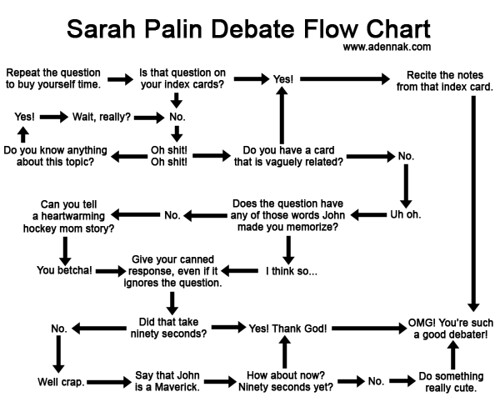
Then there is the debate talk. I don't even want to get very far into the Palin-Biden debate, but let's just say that the only reason Palin did "well" is because the bar for her was set so low it would have been impossible for her to have tripped over it. That being said, I'm pretty offended at her constant use of the quip "Never Again" to refer to the Wall Street fiasco -- can someone please let her know that that phrase is relegated to events of, oh, you know, Holocausts? To take such a significant set of words and throw it on a financial crisis that isn't really that big of a deal relative to past financial crises is offensive. And thanks to my friend Heather, this link has provided me with the Sarah Palin debate flow chart!

If you can't wait for Haveil Havalim on Sunday, Ilana-Davita did a good job of rounding up some posts from the week for your viewing pleasure. Just click here .

For those of you out there of the Jewish Mother persuasion, there's a new Blog Carnival on the block. You can head over to the In the Pink blog to check out how to register.

To close up the random round-up, everyone should head over to Mottel's blog for his Rosh Hashanah in Peru. Yes, despite our absolute differences in opinion about the election and politics, Mottel still takes some amazing photographs and has a lot of fascinating things to share about his worldly travels. And he's an all-around great person :)

Oh, and one more thing: I'm so stoked about the paper I'm going to write for my bible class about the Golden Calf incident. Nachmanides is my homeboy for this one, and unfortunately I disagree with Rashi and most other scholars regarding the purpose of the Golden Calf. I'm being crazy radical! Stay tuned for more!

And with that, I bid you all a Shabbat Shalom!

Oct 2, 2008

Many Paths, One Destination

I had mentioned yesterday some words from Martin Buber's "The Way of Man: According to the Teaching of Hasidim ," and I wanted to just highlight a couple of really fascinating things he discussed about, well, the title of the text -- the way of man.

This is Chapter Two of the very, very brief book, and it starts off with Rabbi Baer of Radoshitz approaching his teacher, the "Seer" of Lublin, imploring him to "Show me one general way to the service of G-d." The teacher replied, "It is impossible to tell men what way they should take. For one way to serve G-d is through learning, another through prayer, another through fasting, and still another through eating. Everyone should carefully observe what way his heart draws him to, and then choose this way with all his strength."

Buber comes out of this with a very, very important point (so pay attention!): "The great and holy deeds done by others are examples for us, since they show, in a concrete manner, what greatness and holiness is, but they are not models which we should copy. However small our achievements may be in comparison with those of our forefathers, they have their real value in that we bring them about in our own way and by our own efforts."

The significance of this lesson is the individuality of paths to G-d. Buber goes on essentially to say that it is precisely because we do not resemble our own, unique selves and rather that we strive to be like others that the Messiah is delayed. This, I think, is pretty interesting it its idea. I always tell people a joke I heard that I think emphasizes the essential wrongness of man: What is the difference between a man and a dog? A dog knows how to act like a dog. (*begin laugh track*)

Buber asserts "Every person born into this world represents something new, something that never existed before, something original and unique.  ... Every man's foremost task is the actualization of his unique, unprecedented and never-recurring potentialities, and not the repetition of something that another, and be it even the greatest, has already achieved."

A great rabbi, Zusya, once said a short while before his death: "In the world to come I shall not be asked: 'Why were you not Moses?' I shall be asked: 'Why were you not Zusya?'"

The point here is that G-d is served and reached in many ways. As Buber says, "Mankind's great chance lies precisely in the unlikeness of men, in the unlikeness of their qualities and inclinations. G-d's all-inclusiveness manifests itself in the infinite multiplicity of the ways that lead to him, each of which is open to one man." (Emphasis my own!) Even the Great Seer of Lublin had more words to this effect, in response to disciples of a deceased zaddik who were shocked at the Seer's different customs: "What sort of G-d would that be who has only one way in which he can be served!"

This, in my opinion, is G-d. A G-d who, as Buber says, does not say "This way leads to me and that does not," but rather says "Whatever you do may be a way to me, provided you do it in such a manner that it leads you to me."

So those are my thoughts. It was an interesting read, albeit it is a little outdated, but the messages (as I've provided here) are pretty thorough and poignant for these days leading up to Yom Kippur. I think this topic -- the many, individual, unique paths to the one destination -- is particularly significant. We're all trying to find out way, but we're often told that there is only this way or that way, but in truth there is not one way because each of our paths are uniquely different and that, as Buber points out, should be the ADVANTAGE, not the DISADVANTAGE.

Be well, and keep reflecting!

Oct 1, 2008

May You, and I, May We Be Inscribed.

Rosh Hashanah reflections? I have few. I'll have to say I was very distracted by the fact that I was born 25 years ago on Rosh Hashanah (making my Hebrew birthday Simchat Torah). I was destined to really let that Jewish soul loose, is what this means.
So for Erev Rosh Hashanah I went to the Chabad dinner since it was so close. It turns out the rabbi is keeping tabs on me, as someone mentioned to him I guess that I'd been in New York. I told him I'd been in Washington Heights, which, I guess, to those from other NY neighborhoods is where the "fancy Jews" are. The food was good, the conversation, too, and I walked away with a bowl full of gefilte fish, which was a stellar parting gift considering I got beat up by the rabbi's middle child (I could really go off on the lack of discipline here, but these are the Days of Awe and I'm really pushing for the book of life). Tuesday, I went to services at Hillel, heard a teenage undergraduate blow the shofar with might while the rabbi's child-size son toyed with the other shofar while oozing with cuteness. A lot of stuff in the service was skipped because there were a couple "break out" sessions of meet your neighbors and to discuss Hannah's song. And after everything? There was no lunch served. But there was Tashlich, and it was my first service as such. It was a little unnerving watching the birds pick up all the things which I had cast off, but I suppose they were carrying it up and above instead of it sinking down below. That night I was a horrible person and ended up going to see a (free) movie screening (of "Religulous") with Evan and then he took me to dinner for my birthday. I also have to mention that he gave me an amazing bouquet of White Roses for the big Two-Five, a gift I haven't gotten from anyone, ever, period. What a prince, no? And today? I was sick. I blame too much gefilte fish and kugel (which I had consumed essentially every day since Friday). So now, Rosh Hashanah is over and we prepare for Yom Kippur. I also realized not so long ago that tomorrow is a fast day (Fast of Gedalia ), but it's a minor fast from dawn until dusk and I'm not so keen on whether this is a hard-core across-the-board type of fast or one of those "you can, you don't have to, but you should, but no hard feelings." Feel free to let me know!

---------------------------------------------------------------

So I sat down tonight with Martin Buber's "The Way of Man: According to the Teaching of Hasidim " because it's 41 pages long and took me about five seconds to plow through. There was a lot of interesting -- and relevant -- stuff in the text which I really want to share with you, my ever-so-lucky readers! In a chapter discussing the tenet of "Not to Be Preoccupied With Oneself," Buber discusses the significance of "turning" or what we know of as teshuvah, which is incredibly appropriate for this period of the Jewish calendar. He tells of a rabbi who married his son to the daughter of Rabbi Eliezer. After the wedding, the rabbi approaches Rabbi Eliezer and tells him that he feels close to him now, that he can tell him what is eating at his heart, he says "My hair and beard have grown white, and I have not yet atoned!" Rabbi Eliezer's response is "Oh my friend, you are thinking only of yourself. How about forgetting yourself and thinking of the world?" Buber, in his wisdom, says that essentially what Rabbi Eliezer is saying is "Do not keep worrying about what you have done wrong, but apply the soul power you are now wasting on self-reproach, to such active relationship to the world as you are destined for. You should not be occupied with yourself but with the world." Buber goes on to iterate a sermon by the Rabbi of Ger on the Day of Atonement, and I think it sums up something pretty worthwhile for considering at this season:
He who has done ill and talks about it and thinks about it all the time does not cast the base thing he did out of his thoughts, and whatever one thinks, therein one is, one's soul is wholly and utterly in what one thinks, and so he dwells in baseness. He will certainly not be able to turn, for his spirit will grow coarse and his heart stubborn, and in addition to this he may be overcome by gloom. What would you? Rake the muck this way, rake the muck that way -- it will always be muck. Have I sinned, or have I not sinned -- what does Heaven get out of it? In the time I am brooding over it I could be stringing pearls for the delight of Heaven. That is why it is written: "Depart from evil and do good" -- turn wholly away from evil, do not dwell upon it, and do good. You have done wrong? Then counteract it by doing right.
Indeed, we're conditioned to dwell. We see the bad in things or in ourselves and it becomes the spotlight's focus. But by dwelling on such things, we're not working in the right way. It must be counteracted, not given validation. That, folks, is your food for thought as we approach Yom Kippur.

Tomorrow I'll put up a piece also from this book by Buber which I think can provide us all a little bit of air when it comes to the many paths to G-d -- anyone who tells you there is one way is truly mistaken. So stay tuned and Shana Tova!

Sep 21, 2007

May you be inscribed in the book of life.

It is said that not fasting on Yom Kippur is better than fasting without purpose. (The fast is introduced in Leviticus, as we are told to afflict our souls and practice "self denial.") It is on Yom Kippur that even most secular Jews take part in services and fasting -- but what is the meaning of such a fast for the secular Jew? On that note, what is the meaning of the fast for a practicing Jew? Is it to suffer? To wilt and wither for but a day? The haftarah (from Isaiah) for Yom Kippur reads:

They say: "Why is it that we have fasted, and You don't see our suffering?
We press down our egoes ... but You don't pay attention!"

Look! On the very day you fast you keep scrabbling for wealth;
On the very day you fast you keep oppressing all your workers.

Look! You fast in strife and contention.
You strike with a wicked fist.

You are not fasting today in such a way
As to make your voices heard on high.

Is that the kind of fast that I desire?
Is that really a day for people to "press down their egoes"?

Am I commanding you to droop your heads like bulrushe
And lie around in sackcloth and ashes?

Is that what you call a fast day,
The kind of day that the God of the Burning Bush would wish?

No!

This is the kind of fast that I desire:

Unlock the shackles put on by wicked power!
Untie the ropes of the yoke!
Let the oppressed go free,
And break off every yoke!

Share your bread with the hungry. Bring the poor, the outcasts, to your house.
When you see them naked, clothe them;
And from your own flesh and blood don't hide yourself.

Then your light will burst through like the dawn;
Then when you need healing it will spring up quickly;
Then your own righteousness will march ahead to guard you.
And a radiance from Adonai will reach out behind to guard you.
Then, when you cry out, Adonai will answer;
Then, when you call. God will say: "Here I am!"

So then, it is not suffering that this day entails. Physical starvation is merely a path to open up the mind and soul. The fast is not a black fast as on Tisha B'Av where we mourn the great tragedies of the past, but a white fast. While on many fasts we afflict the body while fasting, it is on Yom Kippur that we afflict the SOUL. It's sort of solemn, but we greet one another with gemar chatimah tovah -- tidings to be inscribed in the book of life for good. The goals are light, teshuvah, reconciliation.

I can understand perhaps why Yom Kippur is so widely practiced among secular Jews. It is said that 95 percent of Israelis fast on this day. I just have to wonder whether it's really SPENT the way it's meant to be spent. That goes for secular Jews and religious Jews, really. It seems that for many, going to synagogue on the High Holidays is this forced requirement. It's just expected. That's what makes me want to avoid shul on the High Holidays, despite the absolute importance of the days. I'd rather be surrounded by 10 people who genuinely soul search than hundreds who are there because it's just what we do. On that note, why don't more Jews really dedicate themselves to understanding the day, it's meanings and gleanings? I find myself ever more frustrated as the days go on here in Chicago at my super large synagogue. I miss my small community. More importantly, I miss knowing that people care; that it's more than just going through the motions. But I will be in synagogue tonight and tomorrow, thinking of the transgressions of all of humanity, not just myself, and hoping that even those whose hearts are not there, are not present, and I will think on them.

I had a chance this year to ask forgiveness from someone who I had hurt so very deeply more than a year ago, but that whom I hadn't been able to ask for forgiveness prior to last Yom Kippur. The pain carried on through this past year, so I felt it was sufficient to ask, and I am glad that I did. I can't express how light I felt when he said he forgave me. It's as if all the sins -- big and small -- are transformed, only through that one granting forgiveness. Now, and perhaps for the next year and beyond, I must work on forgiving myself. Is it wrong to go into the Yom Kippur fast having a continued heavy heart? Forgiving oneself is perhaps harder than asking forgiveness from those that have been wronged -- and this I have learned, and continue to combat.

 
Design by Free WordPress Themes | Bloggerized by Lasantha - Premium Blogger Themes Powered by Blogger | DSW printable coupons